English | Español
Peace Made by Hand
Through art, memory, and community-led science, Colombians are reclaiming the power to define what happened—and decide what happens next.
-
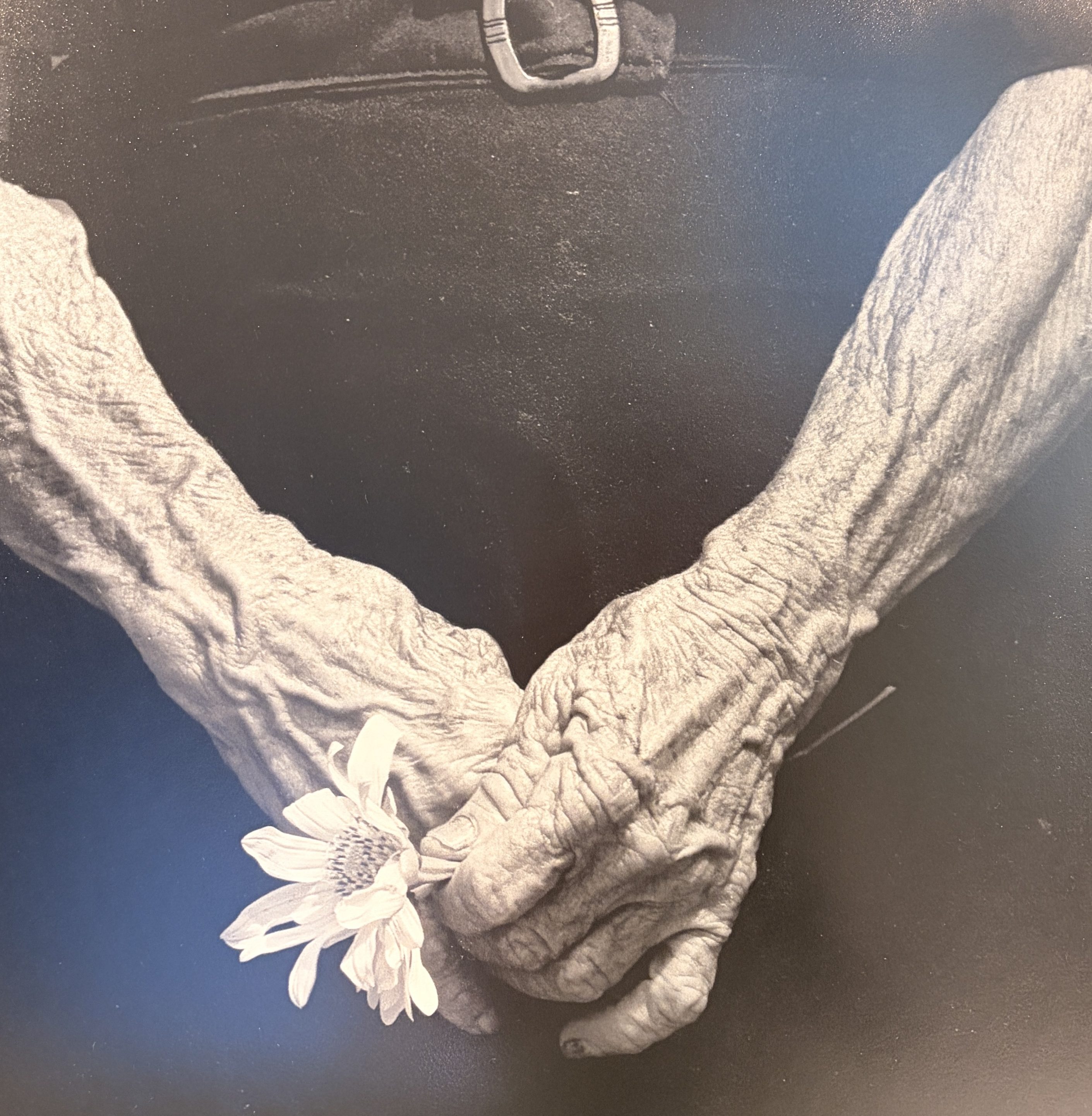
Inside Medellín’s Museo Casa de la Memoria, I stopped before an image of two older hands holding a small flower. It was quiet beside the museum’s more explicit accounts of violence, displacement, and loss. Yet the image seemed to hold something essential: fragility, endurance, and the careful work of keeping life present.
Later, Juan Pablo described another image of possibility. At the Gitó Dokabú reserve, organic waste feeds black soldier fly larvae. The larvae become poultry feed. The chickens produce eggs—creating food, income, and resources that students have discussed using to support access to higher education. This was not an artwork or a memorial. It was a practical system, adapted and operated by the community.
At first, these appeared to be two separate stories: one about art and memory, the other about insects and community-led science. But both asked the same question: after violence, exclusion, and abandonment have narrowed what people can say, preserve, and choose, how do communities recover power over what comes next?
I traveled to Colombia asking how art becomes resistance. I left with a broader understanding of peace itself: not as a finished condition secured by an agreement, but as the continuing work of preserving truth, reclaiming public life, and creating the material freedom to imagine a future beyond survival.
Telling the King the Truth
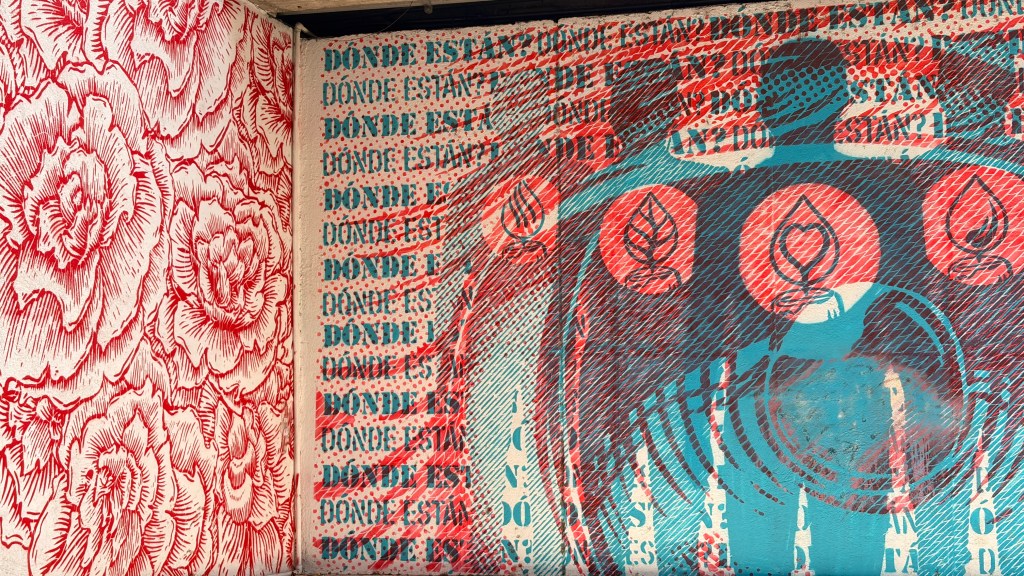
The art I encountered in Colombia did not treat politics as a distant subject. Across city walls, museums, and public spaces, murals named the dead, questioned official narratives, and transformed ordinary streets into places of testimony. They were not simply depicting Colombia.
They were making claims about the country and who had the right to speak within it.
David placed what I was seeing within a longer tradition.
During the 1960s and 1970s, politically engaged theater developed alongside leftist, student, labor, and human rights movements. Teatro La Candelaria used collective creation to turn the stage into a place where people could recognize their own lives and interpret political realities together.
But resistance did not always take a solemn form. David compared Colombia’s humorists and political cartoonists to the court jester, the person who could make the king laugh while telling him truths others could not safely say.
Few embodied that role as powerfully as Jaime Garzón. Through television and radio satire during the 1990s, he confronted politicians, corruption, and economic power. As Heriberto de la Calle, a shoe shiner interviewing some of Colombia’s most influential figures, Garzón inverted the hierarchy: the person expected to remain beneath the powerful became the one asking the questions.
His assassination in 1999 revealed the danger of that democratic act. Humor gave him a way to speak, but it did not protect him from those who feared what he was saying.
Art cannot replace journalism, justice, or political accountability. It can, however, change who is permitted to speak, where that speech occurs, and whether others can look away.
Once those truths have been spoken, another struggle begins: whether they will be remembered or erased.
What Violence Tries to Erase
Outside Medellín’s Museo Casa de la Memoria, a mural offered a promise: “Su nombre nos convoca, su memoria florece en las paredes.” Their name calls us together; their memory blooms on the walls. Inside, I began to understand how much work that promise requires.
One object I stopped before was a white ceramic plate, broken into pieces and arranged beneath glass. Blue drawings continued across its fragments: buildings, people, streets, and scenes no single shard could hold in full.
Beneath the plate were words drawn from a nearby exhibition of children’s definitions collected by Colombian poet and teacher Javier Naranjo in Casa de las estrellas: El universo contado por los niños. One definition read, “Cuando quieres correr, las piernas se te doblan.” When you want to run, your legs buckle.
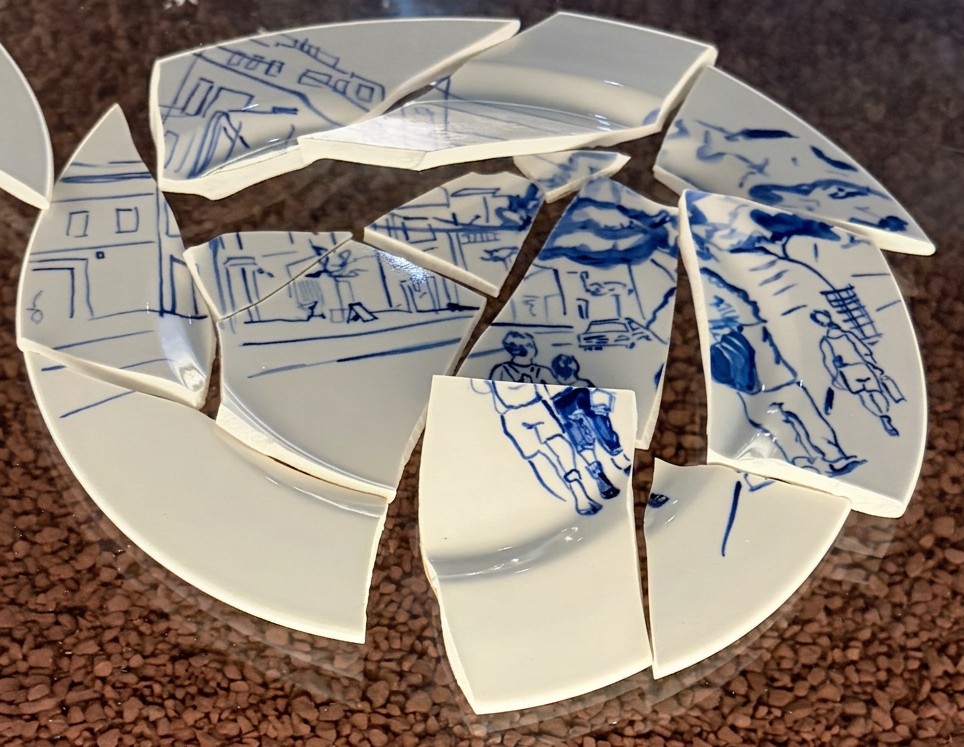
The sentence made fear physical. So did the plate. It had not been repaired. Its fractures still interrupted the images, yet the pieces had been gathered closely enough for a story to reappear. The museum did not pretend the plate had been made whole. It preserved both the images and the damage that had passed through them.
That distinction became central to what I learned in Colombia. Violence does not only injure bodies, take lives, or force people from their homes. It also attempts to control the story that survives. A person can be reduced to a number or an accusation. A place can be remembered only for the violence that occurred there. The relationships, humor, routines, landscapes, and knowledge that made a life recognizable can disappear beneath an official account of what happened.
Memory work resists that second disappearance.
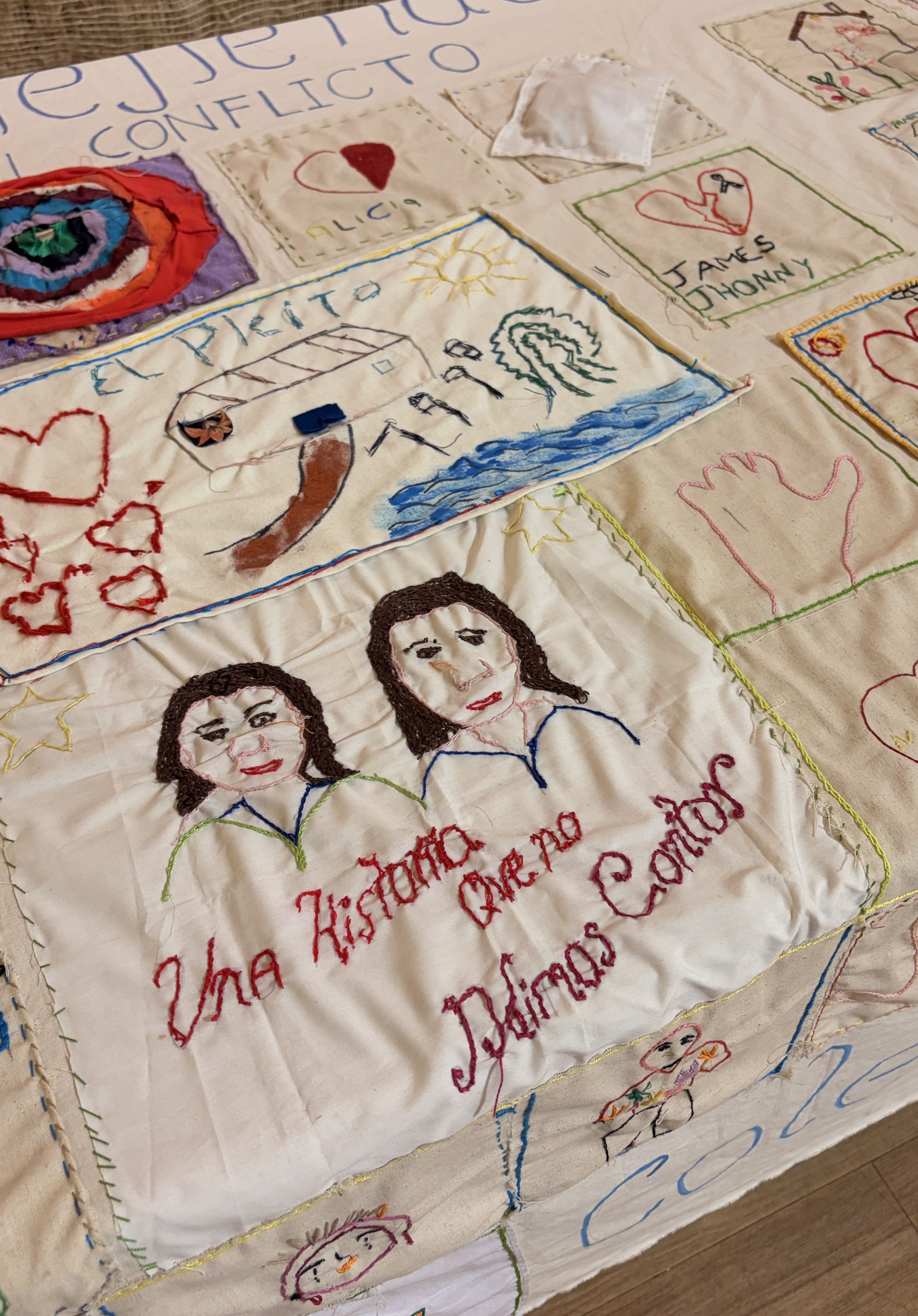
I encountered another material language of memory in Remendar el alma, or Mending the Soul. The exhibition brought together work by 70 women who had experienced gender-based, sexual, political, or conflict-related violence. In a bright yellow room, textiles carried names, faces, houses, bodies, animals, and fragments of writing. One panel showed two women beside the words, “A story we must not silence.”
Thread and cloth, materials associated with domesticity and quiet labor, became forms of public testimony. Experiences often confined to private suffering became part of a collective account of violence, survival, justice, and resistance.
The title did not suggest that art could neatly repair what had happened. A patch does not make a tear disappear. It holds the edges together while leaving evidence of the rupture. That is why repair cannot be separated from justice. Creative expression may help people speak, connect, and survive, but it cannot release institutions from responsibility or place the burden of healing entirely on those who endured the harm.
In Bogotá, the Centro de Memoria, Paz y Reconciliación shifted my attention from intimate objects and textiles to memory built at a civic scale. Thousands of Colombians contributed handfuls of earth and written testimony to the monolith at its center, bringing material from territories marked by violence into a structure dedicated to memory, peace, and reconciliation. Memory was not simply displayed there. It had been carried into the building by many hands.
Artist Juan Rolando described Cartongrafías, a project created with people affected by Colombia’s armed conflict. Using recycled cardboard, linocut printing, maps, writing, and hand-bound pages, participants transformed spoken memories into objects that could be preserved and shared. Cardboard, usually used to carry something else and then discarded, became the thing that carried history.
Many participants had been displaced from rural communities. They had lost not only homes and land, but proximity to rivers, animals, crops, neighbors, traditions, and ways of understanding the world. One displaced child wrote about toys, an absent father, and a mother who had forgotten how to play. Without explaining armed groups or territorial control, the child revealed how conflict had entered the emotional life of a family.
Cartongrafías preserves what institutional records often leave out: what people loved, what they knew, and what they wanted their children to remember. Participants do not merely provide stories for others to interpret. They retain authority over what is remembered and how it is told.
That authority matters because violence often depends upon imposing an identity on someone else. Few examples make this clearer than Colombia’s “false positives.”
The phrase sounds like an administrative mistake. What it describes was deliberate: members of the Colombian military killed civilians and falsely presented them as armed-group members who had died in combat. The Special Jurisdiction for Peace has identified at least 6,402 victims between 2002 and 2008. People were killed, and then false identities were imposed upon them to make their deaths appear legitimate.
The victims’ families challenged those lies. Through MAFAPO, the Mothers of False Positives of Colombia, they preserved testimony, pursued accountability, and transformed private grief into a collective demand for justice.
MAFAPO member Cecilia Arenas learned that her brother, Mario Alexander Arenas, had been buried in military clothing and two new rubber boots—both made for the left foot. Alexander had been a carpenter, not a guerrilla. The carelessness of the disguise exposed the story constructed around his death.
Cecilia later joined other relatives in painting the same kind of boots with names, faces, flowers, landscapes, and demands for justice. On hers, she painted the place where her brother was killed and added yellow flowers to represent life returning after his death.
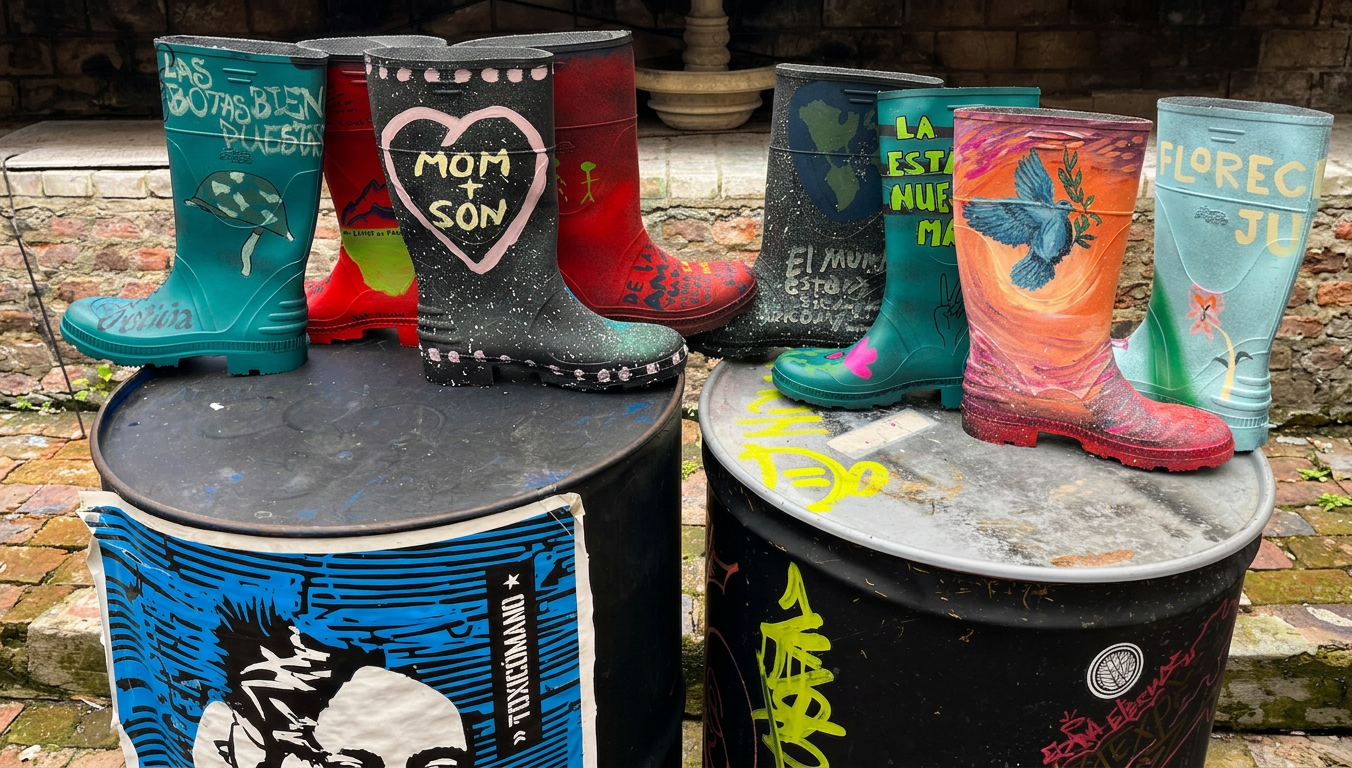
The boots once helped erase the victims’ identities. In the hands of their families, they now restore those identities to public view. This art cannot be understood only as healing. It is also evidence, accusation, and political education. The number 6,402 communicates scale, but it cannot tell us who was a carpenter, who was a son, who had been promised work, or who was expected home.
As Andrés Felipe told me at the Centro, “Art is a tool to talk about what hurts us.” When ordinary words are insufficient, art can carry testimony through other languages.
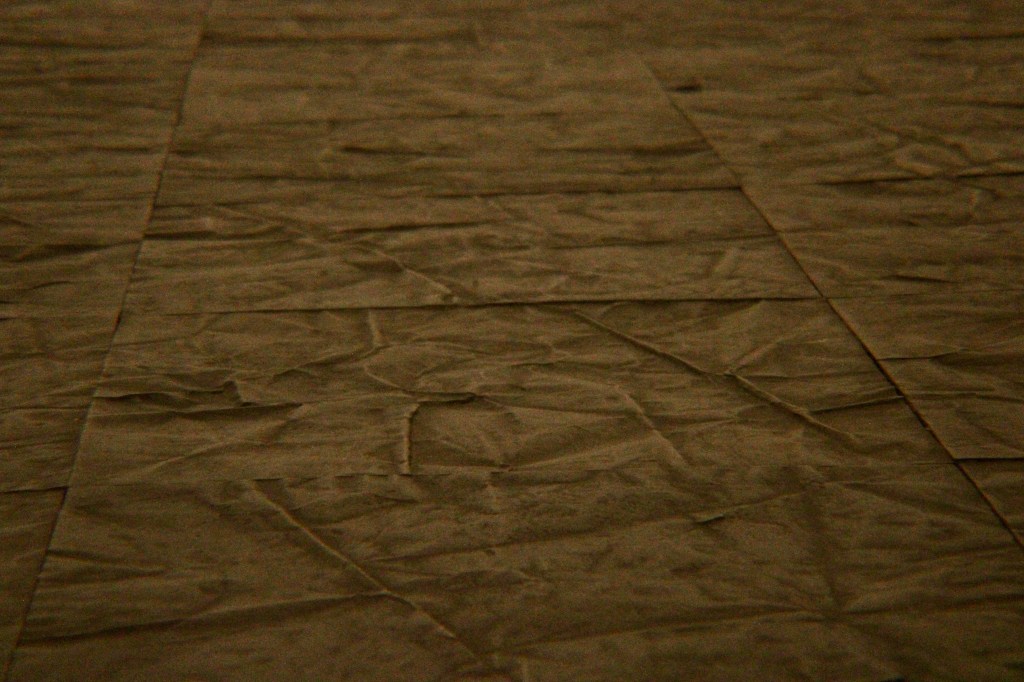
Elsewhere in Bogotá, that resistance lay beneath my feet. At Fragmentos, artist Doris Salcedo transformed weapons surrendered by the FARC-EP into the floor of a counter-monument created with women survivors of sexual violence. Rather than rising above visitors as a heroic statue, the metal lies beneath their feet, marked by the blows of women whose bodies had been treated as battlefields. To walk across it is to encounter disarmament without mistaking it for closure. The weapons have been stripped of their purpose, but the violence they represent has not been converted into triumph. By centering survivors in how the conflict is remembered, Fragmentos turns instruments once used to impose power into a surface upon which a different future must be built.
Andrés at Fragmentos resisted any account of the conflict divided neatly between good and bad. “It is actually much more complex,” he explained. Yet complexity did not require accepting violence as inevitable. “We are not condemned to be violent.” He described conversation as a way to change what people understand as possible and to begin imagining a common future.
The broken plate, the child’s definition, the women’s textiles, the pages of Cartongrafías, MAFAPO’s boots, and the floor of Fragmentos each preserve or transform something violence attempted to take or control. They cannot restore every life or return every family to its land. But they can defend identity against the lies used to erase it, preserve a home after someone has been forced to leave, and make responsibility visible to a public that might otherwise look away.
Memory is not only what remains after violence. It is something people build together in opposition to erasure.
Remembering, however, is not the end of the work. People must also reclaim the spaces from which violence and exclusion have attempted to remove them.
The Right to Be Seen
By the time I reached Comuna 13, I had encountered art as testimony, archive, and accusation. Here, it seemed to surround public life itself.
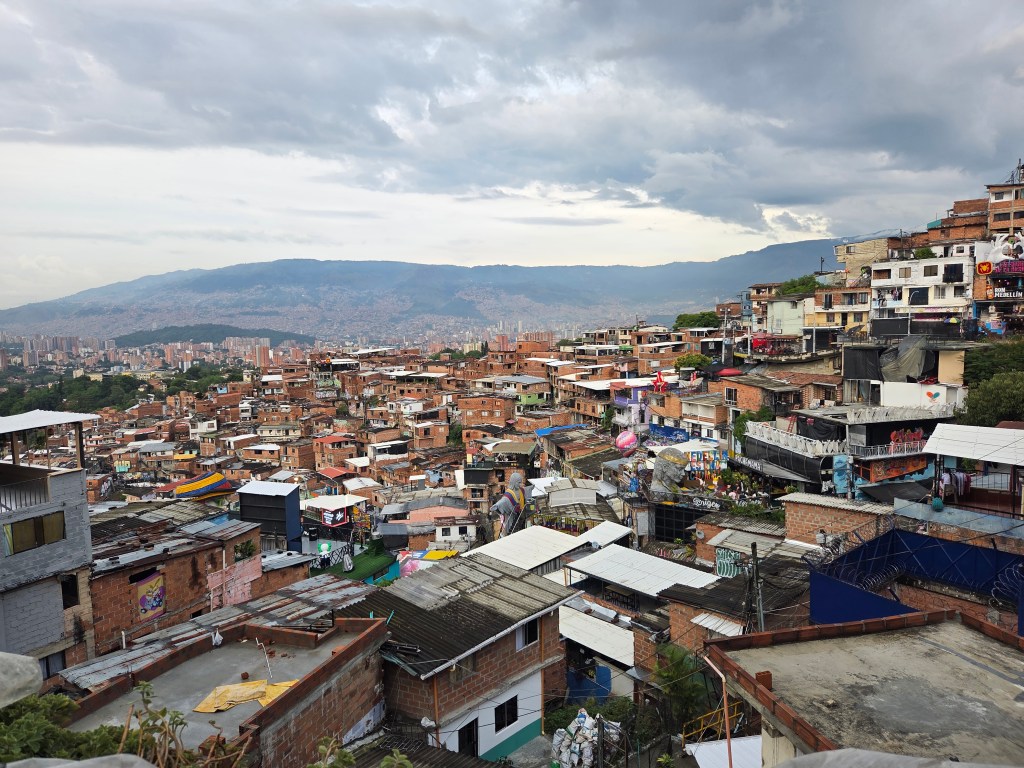
Murals stretched across walls and stairways. Music competed with the voices of guides and vendors. Visitors gathered around dancers, and art appeared on storefronts, clothing, signs, and nearly every surface that could carry an image. The neighborhood did not feel like a gallery people entered and exited. Creative expression had become part of how the streets moved.
I was one of the visitors moving through them.
That position mattered. Comuna 13 is often presented through a simple before-and-after story: violence belongs to the past, color proves recovery, and resilience becomes something visitors can witness within an afternoon. What I encountered was more complicated. The art was not merely evidence that transformation had occurred. It was part of an ongoing struggle over who could occupy public space, describe the neighborhood, and benefit from its story.
For years, armed actors restricted where residents could move, gather, and speak, while military operations exposed civilians to violence, displacement, disappearance, and fear. To outsiders, Comuna 13 became visible primarily through conflict and criminality. Its residents were seen, but through identities imposed upon them.
Environmentalist and rapper Luis Fernando Álvarez, known as El AKA, offered another understanding of the community. His account did not begin with tourists or colorful walls. It began with residents recognizing that they could not wait for the state to create the conditions they needed.
“We figured out that the state isn’t the one that’s going to figure things out,” he explained. “We figured out that it’s us.”
That recognition became a claim to the neighborhood itself: “We are the ones that have to make these places our own.”
For El AKA, hip-hop was one tool for practicing that collective authority. Through La Élite, artists and community members created alternatives through music, education, environmental work, and a community plant nursery. At first, a nursery and hip-hop might seem to belong to different worlds. El AKA rejected that separation.
“Hip-hop is street,” he said, “but under that street, there’s earth, and in the earth lives a story that hasn’t been told yet.”
His words changed how I understood the streets around me. The murals were not the beginning of the neighborhood’s story. Beneath what visitors could see were histories of migration, labor, displacement, family, and survival—and the lives of people who built the community long before it became an international destination.
That work does not depend upon denying fear. “You have to feel the fear,” El AKA said, “but it can’t be part of our daily life.”
“When dealing with fear, we say ‘play,’” he explained. “We say ‘knowledge.’”
When violence attempts to control where people walk, gather, and speak, playing, planting, performing, and learning in public can become refusals of that control. Children and young people need more than survival. They need spaces to build relationships, develop knowledge, and imagine futures beyond the choices armed actors place before them.
This is why it would be incomplete to say that art “saved” Comuna 13. That language can turn sustained community work into a simple story of cultural rescue while obscuring the organizing, education, environmental work, and everyday care behind it. Art did not end criminal control, inequality, disappearances, or threats against community leaders. It created ways to live, organize, remember, and speak within those conditions.
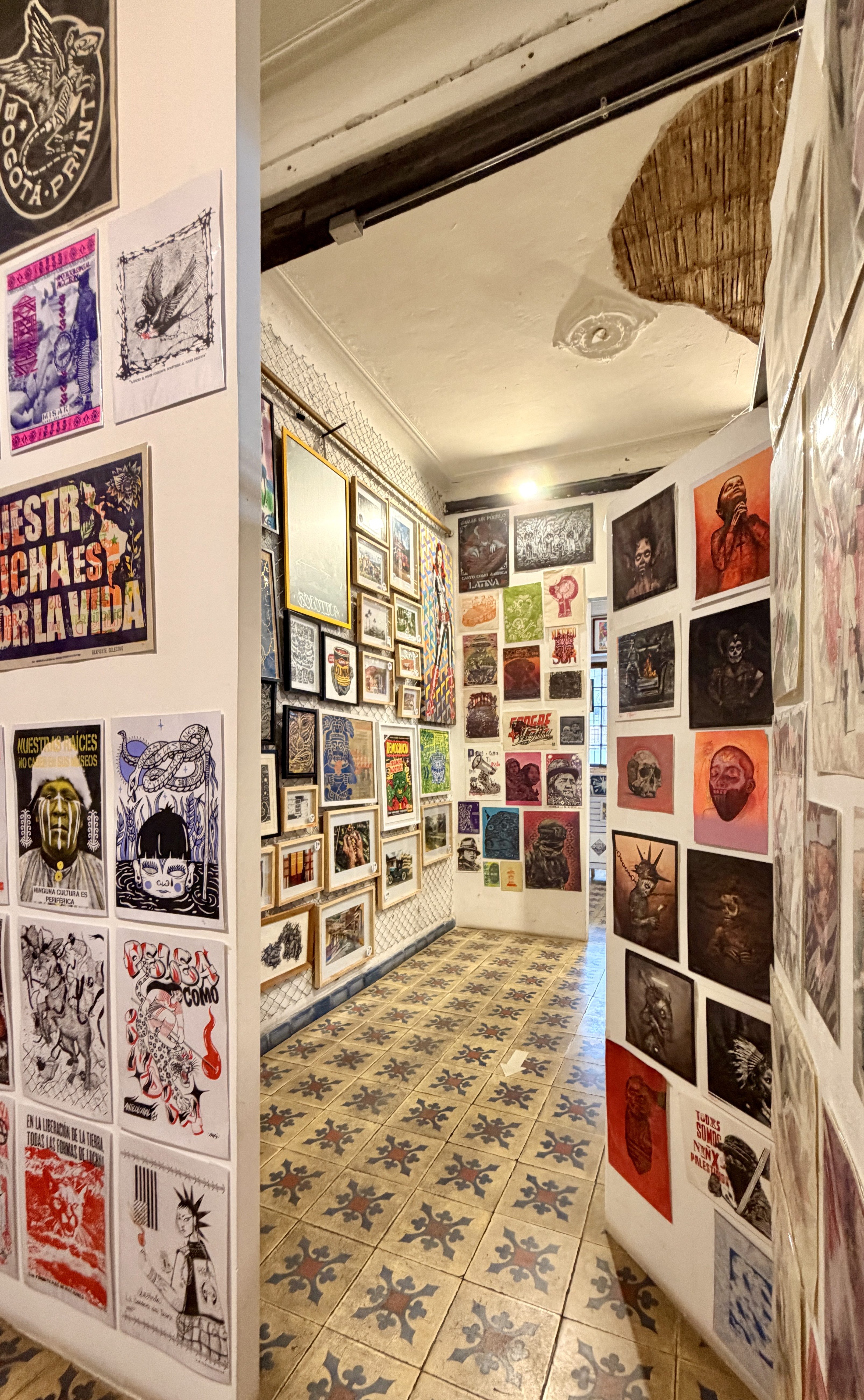
I encountered a related struggle over representation at Casa Cultural Nuestra Herencia in Bogotá. MAFAPO’s painted boots appeared there as they had at the Centro de Memoria, Paz y Reconciliación. Their presence in both a public memory institution and an independent cultural space showed how testimony could circulate between places and reach different audiences without surrendering its demand for justice.
The walls at Casa Cultural held many versions of Colombia, addressing cultural and ethnic identity, femininity, politics, territory, violence, and resistance. Marlin explained how analog printmaking allowed these ideas to be reproduced, worn, sold, and carried into everyday life, creating both expression and income for artists.
The space did not replace one narrow image of Colombia with another. It allowed artists grounded in different territories and experiences to place their own interpretations of the country before the public. That multiplicity resists the idea that Colombia can be understood only through drug trafficking, conflict, or spectacular violence.
The connection between visibility, authorship, and livelihood becomes more fragile when art circulates through tourism.
Tourism has brought income, attention, and opportunity to Comuna 13. Residents work as artists, guides, performers, vendors, and business owners. Community-led tours can allow people to confront the narratives imposed upon the neighborhood, communicate its history directly, and benefit economically from the interest their work has generated.
But visibility and control are not the same thing.
The neighborhood’s murals now travel far beyond their walls through photographs, videos, advertising, and social media. An image created within a particular political and historical context can become separated from its artist and meaning. Resistance can become an aesthetic. Memory can become a backdrop. A neighborhood can be presented as an attraction whose value lies in allowing outsiders to consume a dramatic story of transformation.
I had to consider my own participation in that process. I had come to Colombia intending to learn about peacebuilding and resistance, and I carried a camera because I wanted to preserve and share what I encountered. But every photograph involved a decision about what would represent a place.
If I photographed only bright murals, performers, crowds, and views of the city, I could reproduce the idea that color itself proved the neighborhood’s problems had been resolved. I also did not want to use unfinished brick buildings as visual shorthand for poverty or treat people’s homes as symbols waiting for an outsider’s interpretation. Nor did I want to make violence the dramatic opening of a redemption story that ended with the visitor’s arrival.
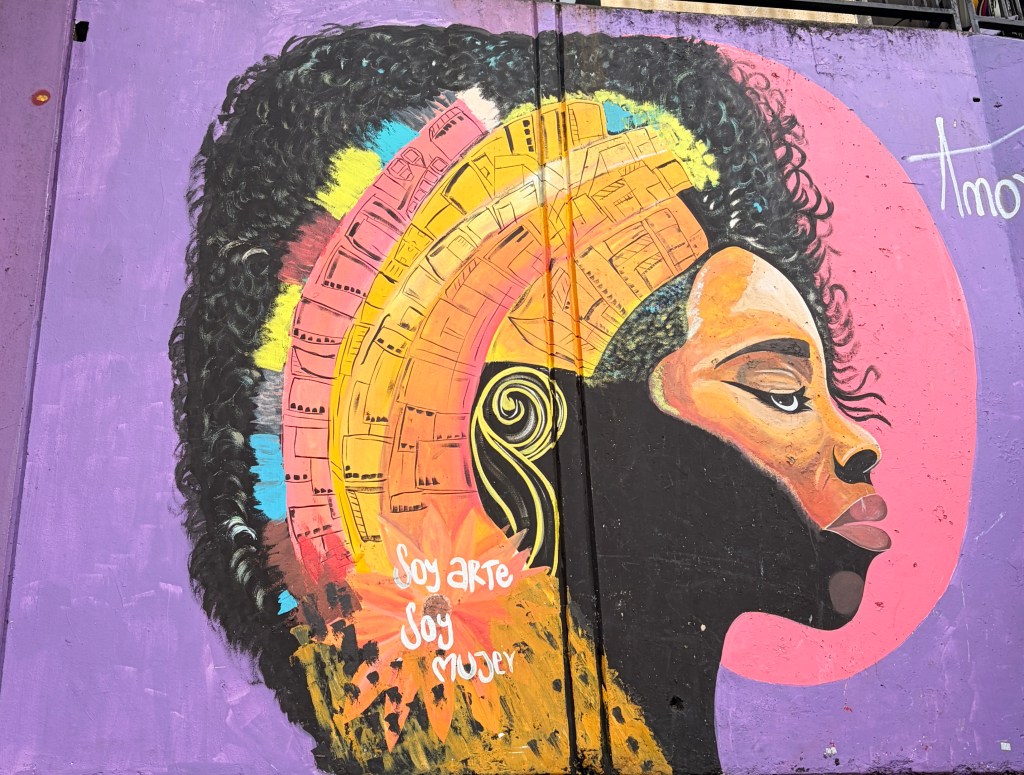
The question was not simply whether I could take a photograph. It was whether the story attached to that photograph would preserve the community’s authorship.
A visitor can see a mural without knowing who painted it. We can watch a performance without understanding the community work that made it possible. We can praise resilience without asking what people are still being required to endure. Even when we spend money in a neighborhood, we may not know whether it supports resident-led work or primarily benefits those who have learned how to market the neighborhood’s image.
These tensions do not mean that Comuna 13 should remain unseen or that visitors have no place there. Isolation also has consequences. For years, stigma allowed the neighborhood to be discussed as a problem while the cultural and political work of its residents received far less attention. The issue is not whether its stories should circulate. It is whether residents remain recognizable as their authors.
The most honest way to encounter Comuna 13 is therefore to resist reducing it to either violence or recovery. Both narratives can flatten the people who live there. One traps the community in its past. The other declares that past resolved and converts ongoing resistance into proof of a completed transformation.
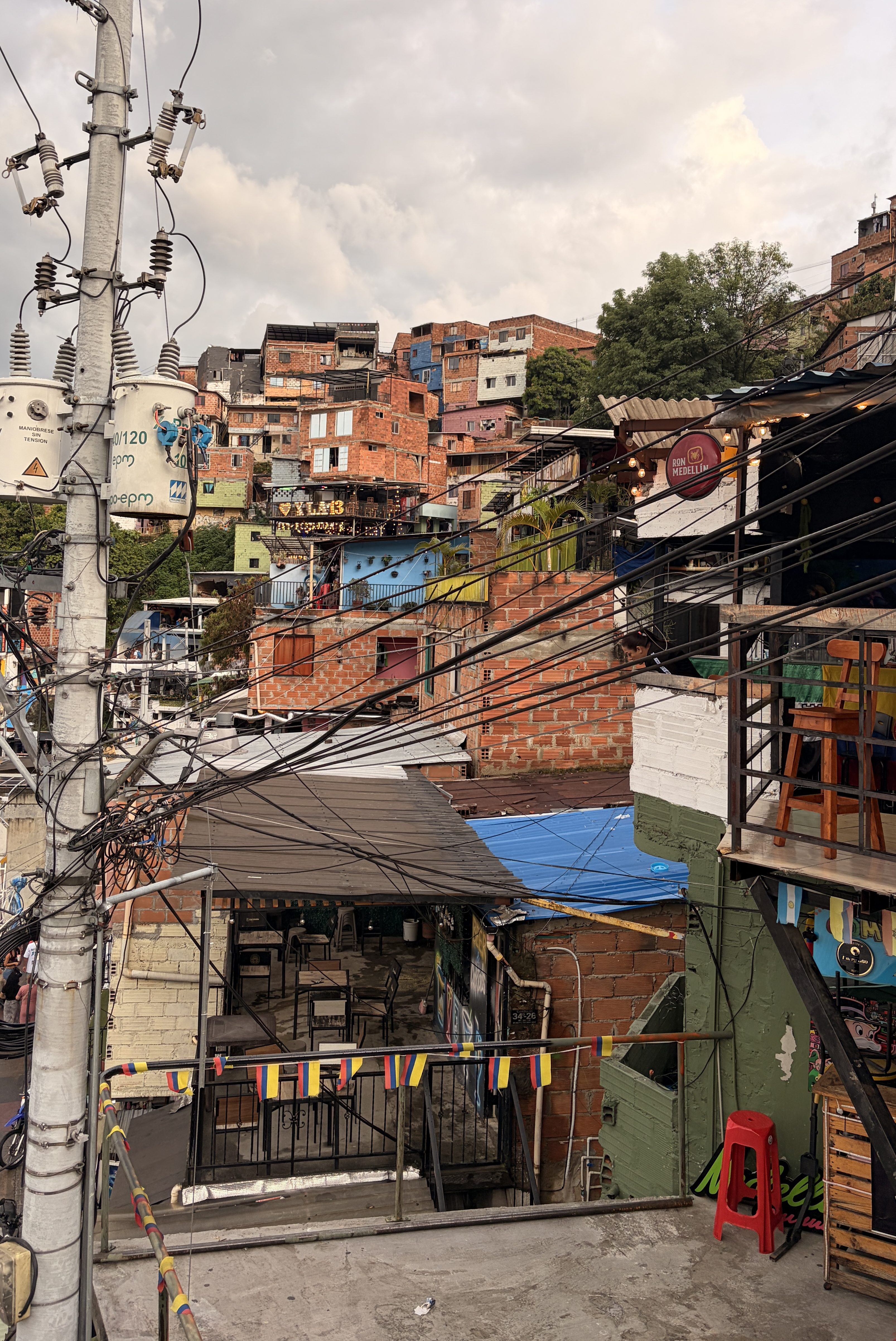
El AKA’s image of the earth beneath the street offers another possibility. A street is never only the surface a visitor sees. It holds what has been buried, built, remembered, and contested. The murals matter, but so do the people cultivating the ground beneath them and the histories that have not yet entered public view.
The right to be seen is not merely the right to attract attention. It is the right to appear as more than someone else’s image of suffering, danger, resilience, or inspiration. It includes the right to be known through one’s own words, art, labor, relationships, and complexity—and to decide what becomes public, what remains private, and how the value created through cultural expression returns to the community.
At Casa Cultural Nuestra Herencia, that right appeared through artists placing their own versions of Colombia before the public. In Comuna 13, it appeared through murals, music, dance, planting, teaching, gathering, and the continued assertion that residents themselves must make the neighborhood their own.
Art did not simply make these communities visible. It gave people tools for negotiating the terms of their visibility.
Being looked at is not the same as being heard. Becoming visible to the world does not guarantee that a community will retain control over what the world believes it has seen. Reclaiming a wall or street is therefore not the final act of resistance. The deeper work is sustaining what can grow there: knowledge, relationships, livelihoods, cultural identity, and forms of collective life that violence did not eliminate.
Peace Must Be Livable
Beneath the street, there is earth. Remembering what lies beneath a place, however, is only part of the work. People must also be able to build a life upon it.
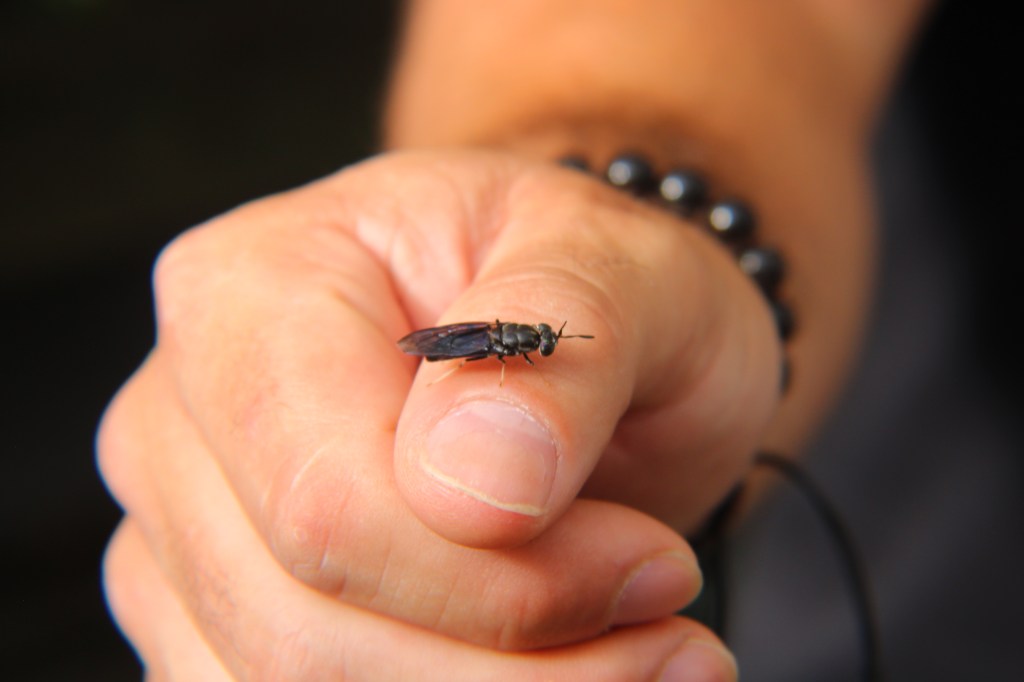
At the Universidad de Caldas, Juan Pablo Ospina Yepes introduced me to a form of resistance that did not begin with a mural, song, or monument. It began with organic waste and the larvae of the black soldier fly.
Through Emerge, the initiative he founded, Juan Pablo explores how materials treated as waste can become resources for rural and Indigenous communities. Black soldier fly larvae consume coffee pulp, fruit peels, restaurant waste, and other organic residues. The larvae provide protein-rich feed for animals, while the material they leave behind can fertilize crops.
Something discarded becomes feed and fertilizer. Yet the larger question is who controls the resources required to produce food. When farmers depend upon commercial feed, chemical fertilizers, and distant suppliers, they remain vulnerable to costs and decisions beyond their control. Transforming materials already present in a territory can expand what a community is able to produce and decide for itself.
For Juan Pablo, this work cannot be separated from Colombia’s armed conflict. He grew up in Pensilvania, a small community in the coffee region where armed groups shaped everyday life through fear. After studying forestry, he worked with approximately 500 rural families involved in cultivating illicit crops. He saw how limited access to education, viable markets, and legal livelihoods constrained the choices available to entire communities.
His commitment to rural development therefore did not emerge from an abstract theory about what communities needed. It grew from living in a territory affected by violence and working alongside families whose decisions were often judged without acknowledging the conditions surrounding them.
Conflict does not arrive only through weapons. It is also sustained by conditions that make some lives and livelihoods appear impossible. When agricultural work cannot support a family or education requires young people to leave their communities permanently, peace remains fragile.
Peace must therefore become material. It must appear in whether a family can produce food, whether a young person can study, and whether leaving home is a genuine choice rather than the only path toward survival.
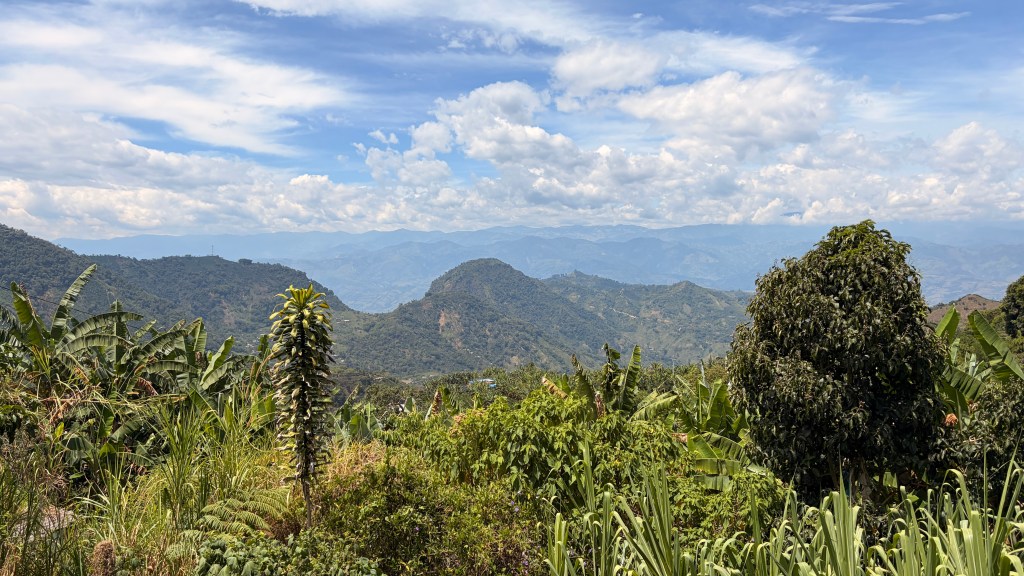
Juan Pablo described what that can look like at Gitó Dokabú, an Emberá Katío Indigenous reserve. Working with the Universidad de Caldas, students and community members established a system that transforms organic waste into feed for laying hens. The chickens produce approximately 60 trays, or 1,800 eggs, each week. The community also earns income by selling hens and has discussed using resources from the project to support access to higher education.
I learned about this work from Juan Pablo rather than through a visit to Gitó Dokabú or conversations with community participants. His account therefore offers one perspective on the project; it cannot substitute for how community members would describe its meaning or impact themselves.
Waste becomes feed. Feed supports chickens. Chickens produce food and income. That income can create educational possibilities.
Yet the project’s importance cannot be measured only in eggs. What matters is who understands the process, operates it, and benefits from what it creates.
Juan Pablo explained that the Gitó Dokabú community had made the technology its own. Students learned how the system worked and connected it to needs identified within their community. The knowledge did not remain exclusively with the university or depend upon the continued presence of those who introduced it.
That ownership distinguishes autonomy from an intervention that leaves a community dependent upon outside expertise. Emerge begins from the premise that people should be able to adapt knowledge, teach it to others, and determine how it fits within their own priorities.
Juan Pablo calls this approach “positive resistance.”
The resistance is not located in the insect itself. It lies in challenging the assumption that rural communities must continually purchase expensive inputs or wait for outsiders to act upon the problems they face. It treats material dismissed as waste as a source of food, fertilizer, income, and education.
Positive resistance does not mean ignoring structural inequality. Agricultural innovation cannot resolve unequal access to land, guarantee fair markets, fulfill the obligations of the state, or repair every harm caused by conflict and abandonment. Communities should not be expected to survive injustice through ingenuity alone. But community-controlled knowledge can expand the choices available within those conditions.
A family that spends less on animal feed can retain more of what it earns. A community that produces fertilizer from local organic material becomes less vulnerable to rising prices and disruptions in outside supply chains. A student who connects agricultural production to education may no longer have to see remaining in a rural territory and pursuing a professional future as mutually exclusive possibilities.
Education is central to that possibility. It is often presented as a path out of rural life, with success measured partly through distance from the community where someone began. Juan Pablo’s work suggests that education can also help someone remain, return, or create new opportunities within the territory that shaped them.
The goal is not to obligate rural young people to stay. It is to ensure that leaving and staying can both be chosen with dignity. The 1,800 eggs matter, but so does whether the system allows a student to imagine a future that did not previously seem available.
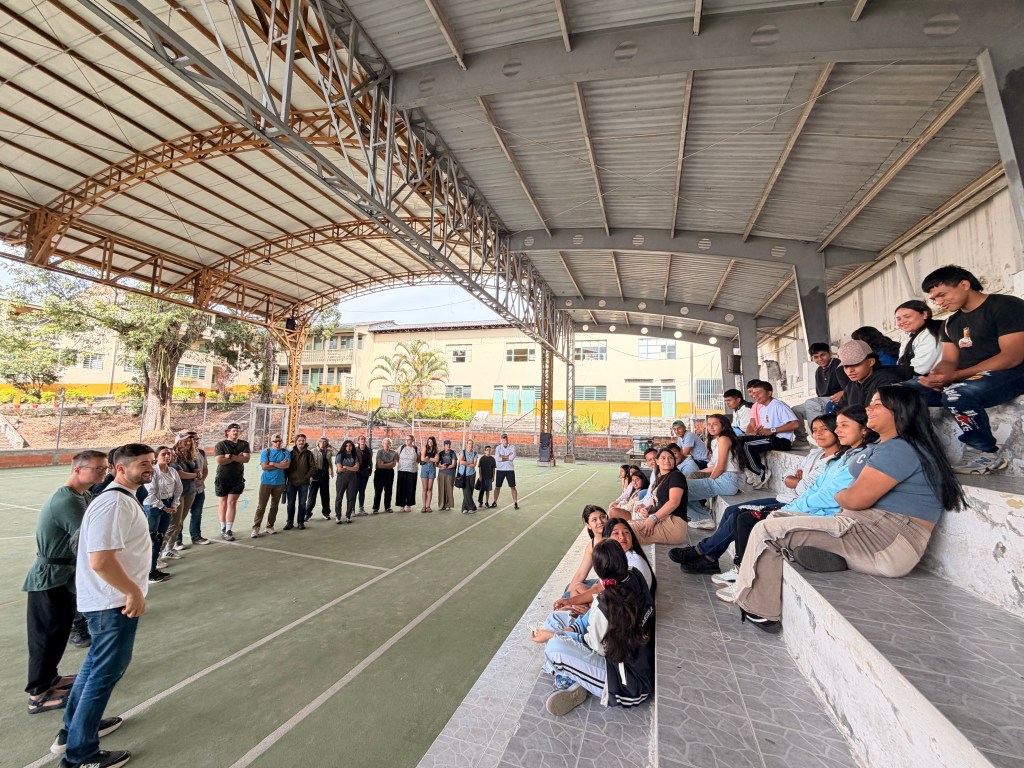
Knowledge gained through a university can circulate back into rural life, while knowledge held within rural and Indigenous communities can influence what universities study and how they understand development.
The relationship to art may appear less direct here. Black soldier fly larvae are not an art object, and agricultural technology does not need to be renamed as art to belong within a discussion of resistance. Yet Juan Pablo’s work revealed another dimension of creativity: recognizing possibilities within materials and places that others have dismissed as lacking value.
Cardboard became an archive in Cartongrafías. Rubber boots used to construct a lie became demands for justice in the hands of MAFAPO. Thread carried testimony once confined to private suffering. In Emerge, organic waste becomes food, fertilizer, income, and education.
These projects are not equivalent, but each rejects an imposed conclusion about what something, someone, or somewhere is worth. Memory protects people from being reduced to what happened to them. Material peace protects them from remaining trapped by the conditions that followed.
Juan Pablo hopes Emerge can eventually become an international network through which rural and Indigenous communities share knowledge. The goal is not to install the same system everywhere, but to allow communities to adapt, use, or reject ideas according to their own environments and priorities.
That distinction matters in international service and development. It is easy for outsiders to arrive with a model, call it a solution, and measure success by whether it was delivered. It is harder to build relationships in which knowledge moves in multiple directions and communities retain authority over what happens next.
I came to Colombia asking how art becomes resistance, but the people I met expanded the meaning of both words. Resistance could preserve a memory, reclaim a wall, cultivate a garden, or question who gave an order. It could also take the form of a student learning how an insect transforms discarded material into something their community can use.
None of these practices makes peace inevitable. They do, however, give peace somewhere to live.
Peace lives in the ability to remember without surrendering the future to what happened. It lives in public spaces where people can gather without fear, in cultural work that provides expression and livelihood, and in knowledge that allows communities to create value without relinquishing control.
Art can help people envision a world beyond violence. Positive resistance asks how that world might be fed, taught, sustained, and made possible in everyday life.
By the end of the journey, I understood the hands holding the flower differently. They did not represent peace as something delicate and complete, but the work of keeping possibility alive. Hands bound cardboard into archives, stitched testimony into cloth, painted boots, hammered metal made from surrendered weapons, cultivated plants in community nurseries, and transformed discarded material into food. Peace was not simply imagined. It was made and sustained through collective work.
Peace cannot remain only an agreement, a memory, or an aspiration.
It must become a life people are actually able to live.
Author’s Note | August 11, 2026
As I completed this project, a 7.4-magnitude earthquake struck western Colombia, causing loss of life and widespread damage. In Manizales, homes and community infrastructure were affected, and part of the cathedral where I had stood only weeks earlier collapsed. I hold the friends, teachers, and communities who welcomed me especially close as recovery begins.
Acknowledgments
This project was made possible by the artists, educators, researchers, organizers, students, and community members who welcomed me and generously shared their knowledge and experiences.
I am especially grateful to Andrés at Fragmentos; Marlin at Casa Cultural Nuestra Herencia; Juan Rolando Paz and Andrés Felipe at the Centro de Memoria, Paz y Reconciliación; Juan Pablo Ospina Yepes, Felipe, Juan Diego, Juan David, and Andrés, whose knowledge and conversations shaped the section about Emerge and the work taking place through the Universidad de Caldas; and David Aponte Castro, Security, Development, and Public Policy Advisor at the Universidad de los Andes.
I am grateful to Nic, Nora, Rafael, and Justin for helping translate and review the Spanish-language interviews and materials used in this project.
I am also grateful to Youthlinc, the RootEd Global Impact Fellowship, Utah State University, the Universidad de Caldas, and the Universidad de los Andes for helping make this learning possible. Their generosity shaped this work. Its interpretations and any errors are my own.
Sources and Methods
This essay draws on observations made during my travel in Colombia; conversations with artists, educators, researchers, organizers, students, and community members; and materials published by the institutions and organizations discussed. Interviews and conversations took place in English and Spanish. Spanish-language interviews and materials were translated into English with assistance from my partner, Nic, who is bilingual and Mexican American; his mother, Nora, a native Spanish speaker born in Mexico; Rafael (Rafi) my cousin’s partner and native Colombian and Spanish speaker, and my brother, Justin, who is bilingual through formal study. Some quotations have been lightly edited for clarity without changing their meaning. The interpretations presented here are my own.