English | Español
Paz, Hecha a Mano
Los colombianos están dando sentido a su historia reciente a través del arte, la memoria y la ciencia. Ahora, estas comunidades están decidiendo qué viene después.
-
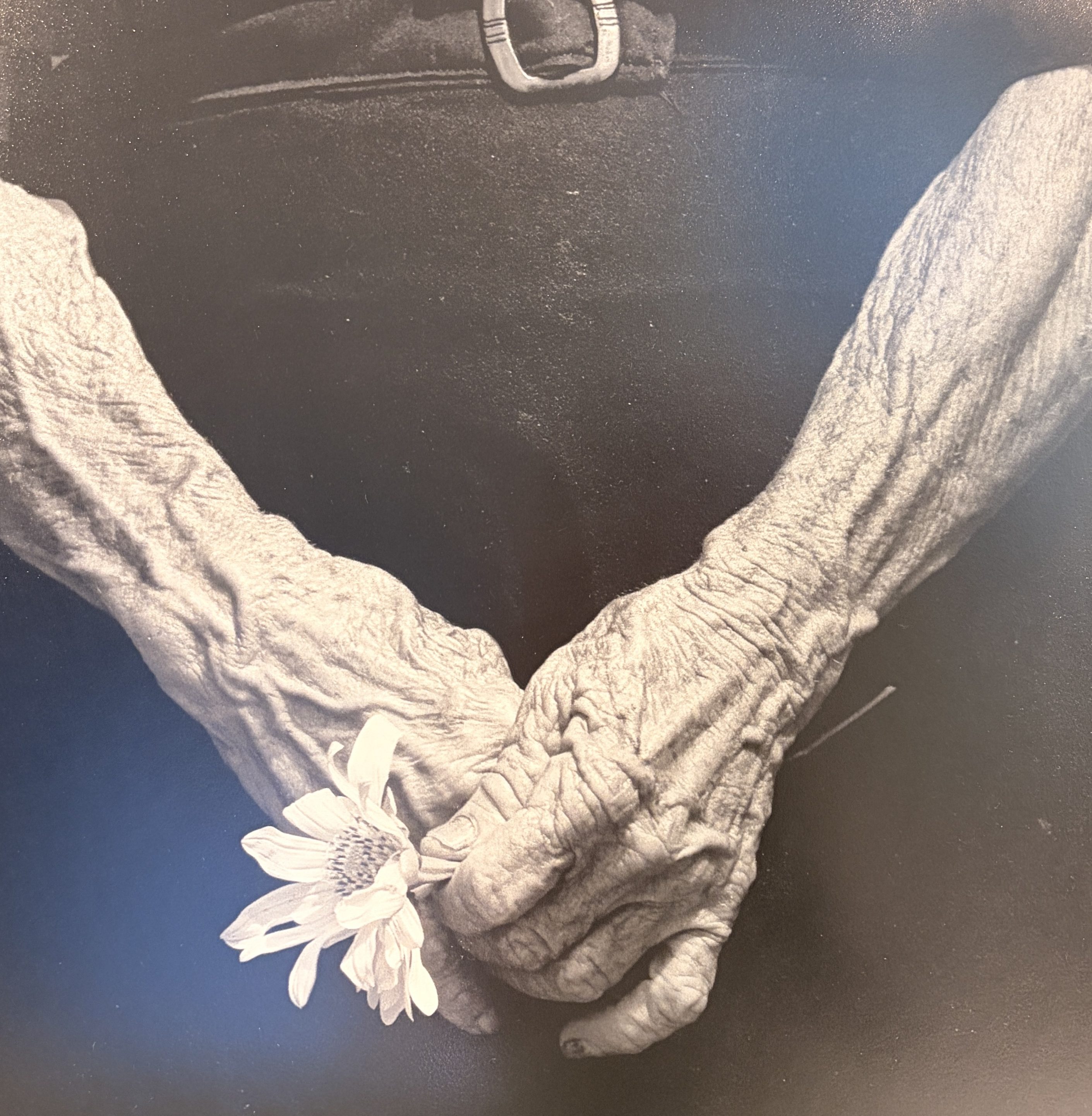
Dentro del Museo Casa de la Memoria de Medellín, me detuve ante una imagen de unas manos envejecidas que sostenían una pequeña flor. Junto a exposiciones más gráficas, que representaban recuerdos de violencia, pérdida y desplazamiento, esta imagen me pareció serena. Contenía algo esencial: era frágil y, aun así, perduraba. Era un acto cuidadoso de permanecer presente.
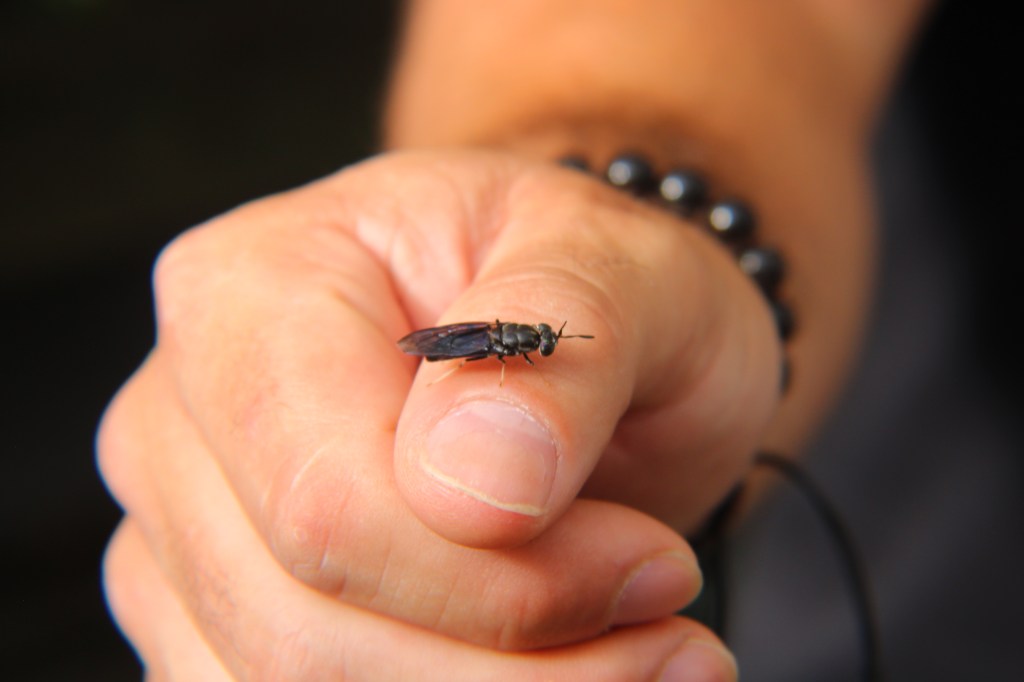
Más tarde, Juan Pablo describió otra imagen de posibilidad. En el resguardo de Gitó Dokabú, los residuos orgánicos alimentan a las larvas de la mosca soldado negra. Las larvas se convierten en alimento para aves de corral. Las gallinas producen huevos, es decir, alimento, ingresos y recursos que los estudiantes pueden destinar al acceso a la educación superior. No era arte ni memoria. Era un sistema práctico, adaptado y gestionado por la comunidad.
Al principio, estas historias parecen distintas: una trata del arte y la otra, de la ciencia de las moscas. Sin embargo, ambas comparten una pregunta: después de que la violencia, la exclusión y el abandono han limitado lo que las personas pueden elegir, decir y preservar, cómo recuperan las comunidades el poder de decidir su propio futuro?
Viajé a Colombia para hacer esta pregunta: cómo se convierte el arte en resistencia? Regresé comprendiendo la paz no como una condición establecida en un acuerdo, sino como la labor constante de preservar la verdad, reclamar la vida pública y crear la libertad necesaria para imaginar un futuro más allá de la supervivencia.
Lo Que la Violencia Intenta Borrar
Afuera del Museo Casa de la Memoria de Medellín, un mural ofrecía una promesa: “Su nombre nos convoca, su memoria florece en las paredes”. Dentro, comencé a comprender cuánto trabajo requiere cumplir esa promesa.
Un objeto ante el cual me detuve fue un plato de cerámica blanca, roto en pedazos y colocado bajo un cristal. Dibujos azules continuaban a través de sus fragmentos: edificios, personas, calles y escenas que ningún trozo podía contener por completo.
Debajo del plato había palabras extraídas de una exposición cercana con definiciones infantiles recopiladas por el poeta y maestro colombiano Javier Naranjo en Casa de las estrellas: El universo contado por los niños. Una de ellas decía: “Cuando quieres correr, las piernas se te doblan”.
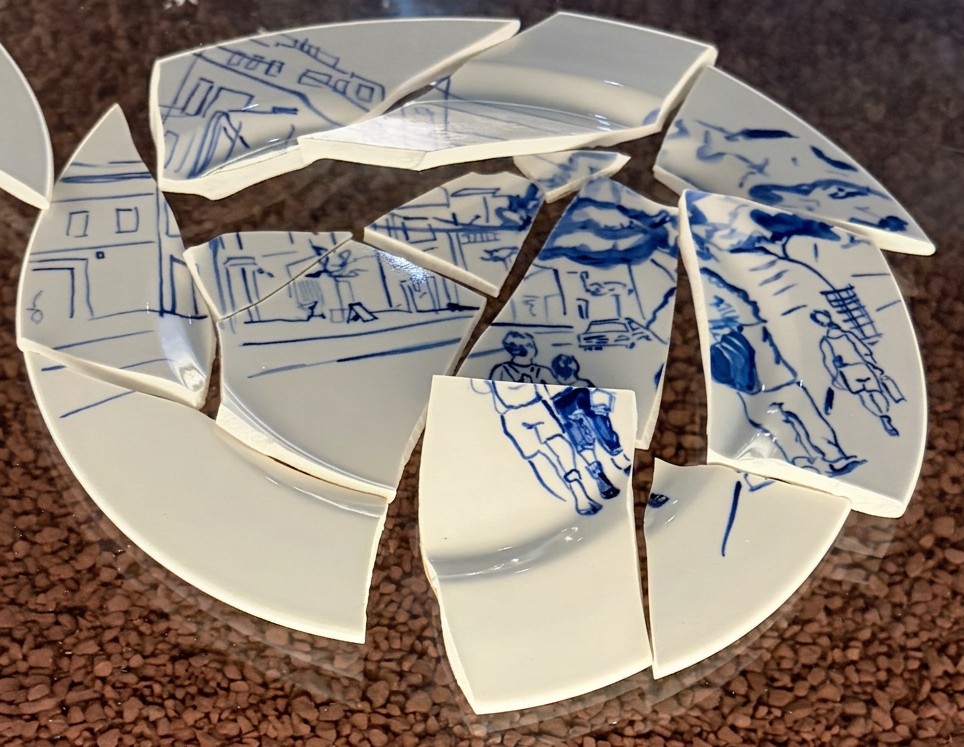
La frase hizo que el miedo se volviera físico. El plato también. No había sido reparado. Sus fracturas aún interrumpían las imágenes, pero los pedazos se habían reunido lo suficientemente cerca como para que una historia volviera a aparecer. El museo no pretendía que el plato estuviera entero. Conservaba tanto las imágenes como las huellas del daño que habían sufrido.
Esa distinción se volvió fundamental para comprender lo que aprendí en Colombia. La violencia no solo hiere cuerpos, quita vidas u obliga a las personas a abandonar sus hogares. También intenta controlar la historia que permanece. Una persona puede ser reducida a un número o una acusación. Un lugar puede ser recordado únicamente por la violencia que allí ocurrió. Las relaciones, el humor, las rutinas, los paisajes y el conocimiento que daban sentido a una vida pueden desaparecer bajo el relato oficial de lo sucedido.
El trabajo de la memoria resiste esa segunda desaparición.
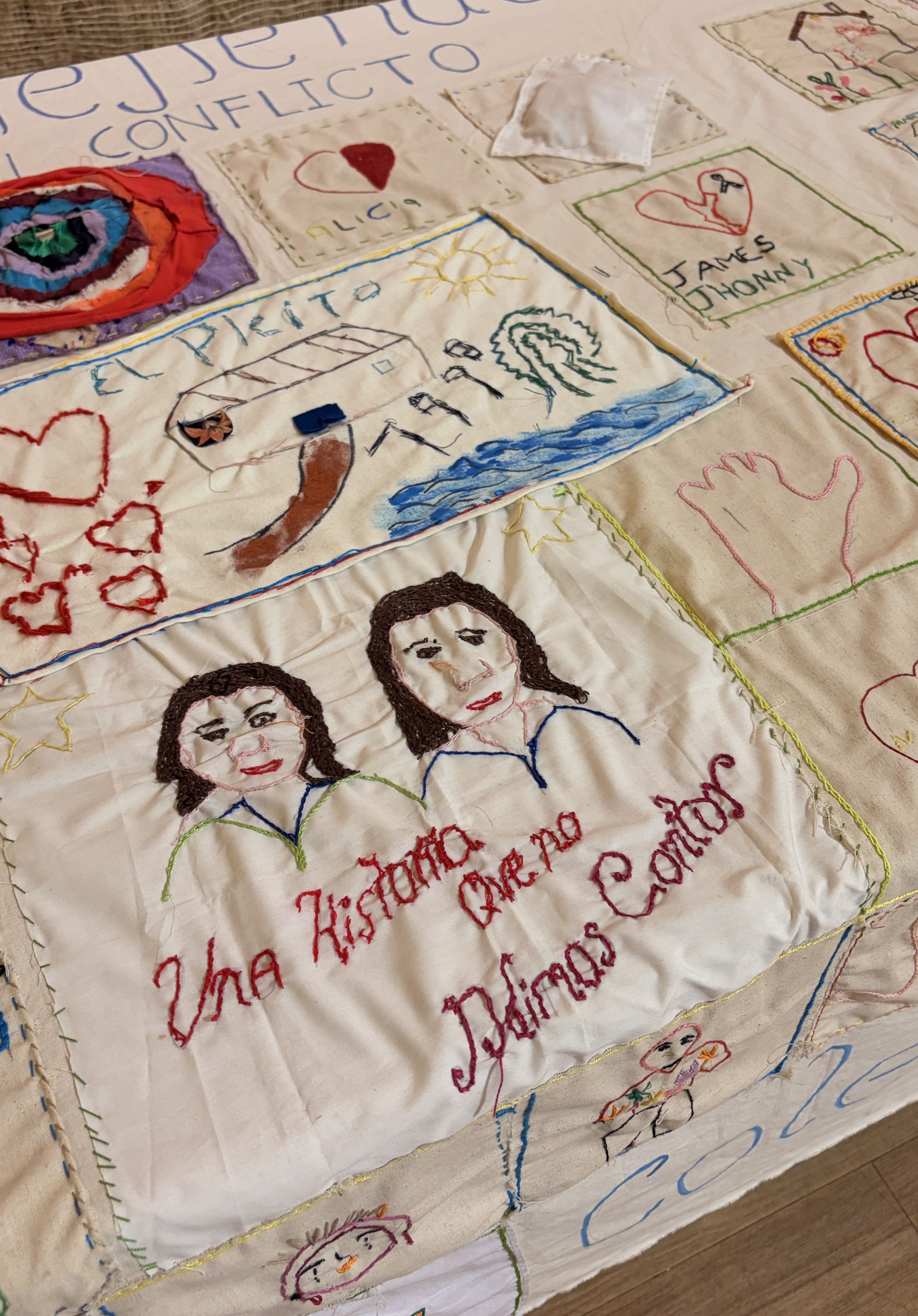
Encontré otro lenguaje material de la memoria en Remendar el alma. La exposición reunió el trabajo de 70 mujeres que habían sufrido violencia de género, sexual, política o relacionada con el conflictos. En una sala de color amarillo brillante, los textiles llevaban nombres, rostros, casas, cuerpos, animales y fragmentos de escritura. Un panel mostraba a dos mujeres junto a las palabras, “Una historia que no debemos silenciar”.
Hilo y tela, materiales asociados con la vida doméstica y el trabajo silencioso, se convirtieron en formas de testimonio público. Experiencias que habían quedado confinadas al sufrimiento privado se convirtieron en parte de un relato colectivo de violencia, supervivencia, justicia y resistencia.
El título no sugería que el arte pudiera reparar perfectamente lo sucedido. Un remiendo no borra una rotura. Mantiene los bordes unidos, pero deja evidencia de la ruptura. Por eso, la reparación no puede separarse de la justicia. La expresión creativa puede liberar a las instituciones de su responsabilidad ni depositar toda la carga de la sanación sobre quienes sufrieron el daño.
En Bogotá, el Centro de Memoria, Paz y Reconciliación llevó mi atención de los objetos íntimos y los textiles hacia la memoria construida a escala cívica. Miles de colombianos contribuyeron con puñados de tierra y testimonios escritos al monolito en su centro, levando materiales provenientes de territorios marcados por la violencia a una estructura dedicada a la memoria, la paz y la reconciliación. La memoria no solo se exhibía allí; había sido llevada al edificio por muchas manos.
El artista Juan Rolando describió Cartonografías, un proyecto creado con personas afectadas por el conflicto armado en Colombia. Mediante cartón reciclado, grabado en linóleo, mapas, escritura y páginas encuadernadas a mano, los participantes transformaron recuerdos transmitidos oralmentes en objetos que podían conservarse y compartirse. El cartón, generalmente usado para transportar otra cosa y luego desechado, se convirtió en el portador de la historia.
Muchos participantes habían sido desplazados de sus comunidades rurales. Habían perdido no solo sus hogares y tierras, sino también la cercanía a ríos, animales, cultivos, vecinos, tradiciones y formas de comprender el mundo. Un niño desplazado escribió sobre juguetes, un padre ausente y una madre que había olvidado cómo jugar. Sin mencionar grupos armados ni control territorial, el niño reveló cómo el conflicto había entrado en la vida emocional de una familia.
Cartongrafías preserva lo que los registros institucionales suelen omitir: lo que las personas amaban, lo que sabía y lo que quería que sus hijos recordaran. Los participantes no se limitan a proporcionar historias para que otros las interpreten. Conservan el control sobre qué se recuerda y cómo se cuenta.
Ese control importa porque la violencia a menudo depende de imponerle una identidad a otra persona. Pocos ejemplos lo ilustran mejor que los “falsos positivos” en Colombia.
La expresión suena a un error administrativo. Lo que describe, sin embargo, fue deliberado: miembros del ejército colombiano asesinaron a civiles y los presentaron falsamente como miembros de grupos armados que habían muerto en combate. La Jurisdicción Especial para la Paz ha identificado al menos 6402 víctimas entre 2002 y 2008. Estas personas fueron asesinadas y luego se les atribuyeron identidades falsas para que sus muertes parecieran legítimas.
Las familias de las víctimas desafiaron esas mentiras. A través de MAFAPO, las Madres de Falsos Positivos de Colombia preservaron testimonios, exigieron justicia y transformaron el dolor individual en una demanda colectiva.
Cecilia Arenas, miembro de MAFAPO, descubrió que su hermano, Mario Alexander Arenas, había sido enterrado con ropa militar y dos botas de goma nuevas, as dos para el pie izquierdo. Alexander era carpintero, no guerrillero. El descuido en el montaje dejó al descubierto la historia falsa construida en torno a su muerte.
Posteriormente, Cecilia se unió a otros familiares para pintar botas similares con nombres, rostros, flores, paisajes y demandas de justicia. En las suyas, pintó el lugar donde su hermano fue asesinado y añadió flores amarillas para representar el renacimiento de la vida tras su muerte.
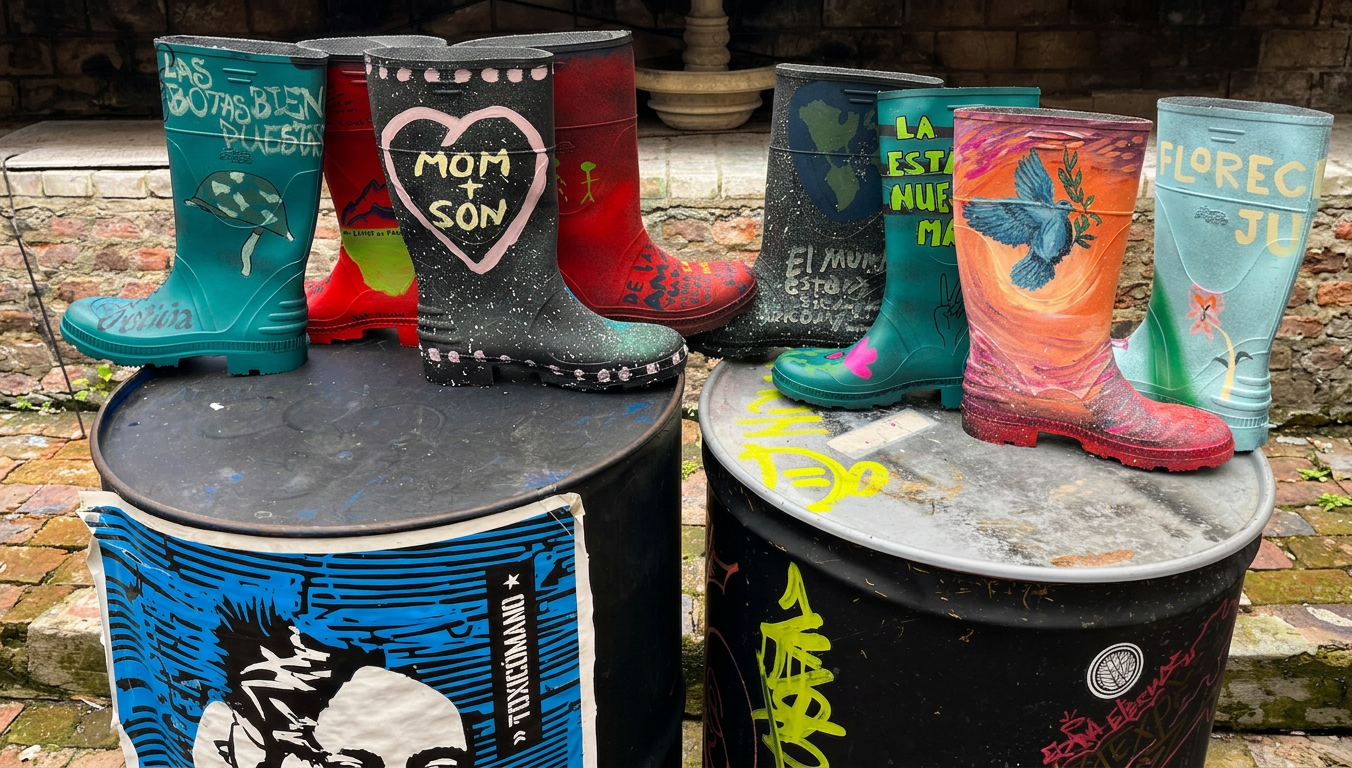
En su momento, esas botas ayudaron a borrar la identidad de las víctimas. Ahora, en manos de sus familias, devuelven esa identidad a la vista del público. Este arte no puede entenderse únicamente como una forma de sanación. También es evidencia, denuncia y educación política. El número 6,402 comunica la magnitud, pero no puede decirnos quién era carpintero, quién era hijo, a quién se le había prometido trabajo o a quién esperaban de regreso en casa.
Como me dijo Andrés Felipe en el Centro, “El arte es una herramienta para hablar de lo que nos duele”. Cuando las palabras habituales no son suficientes, el arte puede transmitir testimonios a través de otros lenguajes.
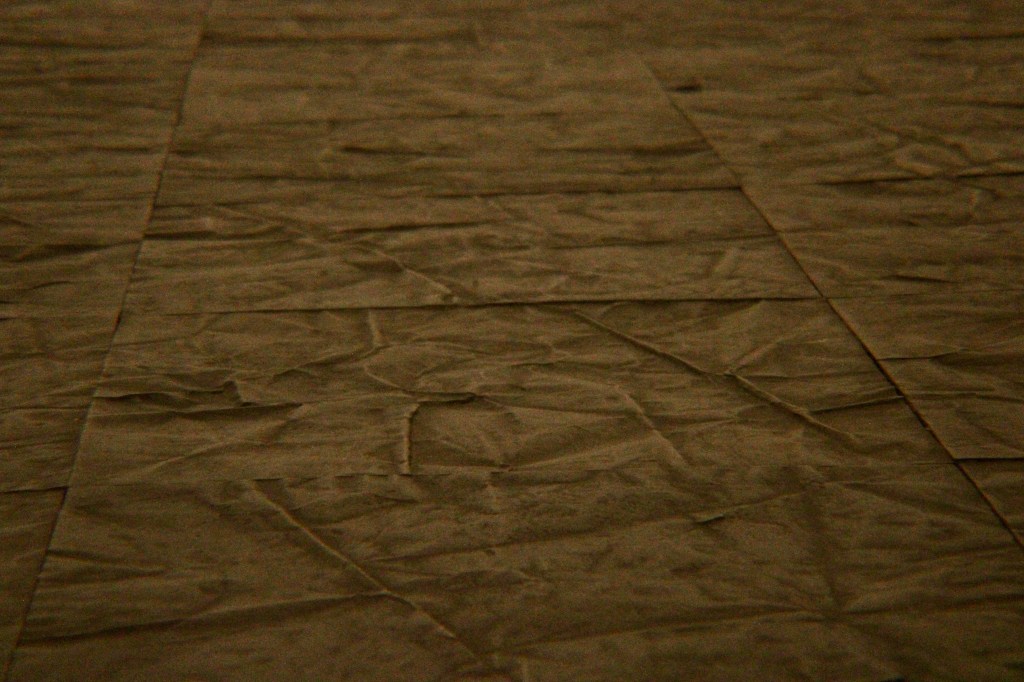
En otro lugar de Bogotá, esa resistencia estaba literalmente bajo mis pies. En Fragmentos, la artista Doris Salcedo transformó armas entregadas por las FARC en el suelo de un contramonumento creado con mujeres sobrevivientes de violencia sexual. En lugar de erigirse sobre los visitantes como una estatua heroica, el metal yace bajo sus pies, marcado por los golpes de mujeres cuyos cuerpos fueron tratados como campos de batalla. Caminar sobre él significa encontrarse con el desarme sin confundirlo con el fin de la historia. Las armas han perdido su propósito, pero la violencia que representan no se ha transformado en triunfo. Al situar a las sobrevivientes en el centro de la memoria del conflicto, Fragmentos transforma instrumentos que alguna vez se usaron para imponer poder en una superficie sobre la cual debe construirse un futuro diferente.
Andrés, en Fragmentos, se resistió a cualquier relato del conflicto que lo dividiera claramente entre buenos y malos. “En realidad es mucho más complejo”, explicó. Sin embargo, reconocer esa complejidad no significaba aceptar la violencia como inevitable. “No estamos condenados a la violencia”. Describió la conversación como una forma de cambiar la percepción de lo posible y de empezar a imaginar un futuro común.
El plato roto, la definición del niño, los textiles de las mujeres, las páginas de Cartongrafías, las botas de MAFAPO y el suelo de Fragmentos preservan o transforman algo que la violencia intentó arrebatar o controlar. defender la identidad frente a las mentiras ni devolver a todas las familias a sus tierras. Pero pueden defender la identidad contra las mentiras utilizadas para borrarla, preservar un hogar después de que alguien haya sido obligado a abandonarlo y hacer visible la responsabilidad ante un público que, de otro modo, podría mirar hacia otro lado.
La memoria no es solo lo que queda después de la violencia. Es algo que las personas construyen juntas para resistir el borrado.
Recordar, sin embargo, no es el final del trabajo. Las personas también deben recuperar los espacios de los que la violencia y la exclusión han intentado expulsarlas.
The Right to Be Seen
By the time I reached Comuna 13, I had encountered art as testimony, archive, and accusation. Here, it seemed to surround public life itself.
Murals stretched across walls and stairways. Music competed with the voices of guides and vendors. Visitors gathered around dancers, and art appeared on storefronts, clothing, signs, and nearly every surface that could carry an image. The neighborhood did not feel like a gallery people entered and exited. Creative expression had become part of how the streets moved.
I was one of the visitors moving through them.
That position mattered. Comuna 13 is often presented through a simple before-and-after story: violence belongs to the past, color proves recovery, and resilience becomes something visitors can witness within an afternoon. What I encountered was more complicated. The art was not merely evidence that transformation had occurred. It was part of an ongoing struggle over who could occupy public space, describe the neighborhood, and benefit from its story.
For years, armed actors restricted where residents could move, gather, and speak, while military operations exposed civilians to violence, displacement, disappearance, and fear. To outsiders, Comuna 13 became visible primarily through conflict and criminality. Its residents were seen, but through identities imposed upon them.
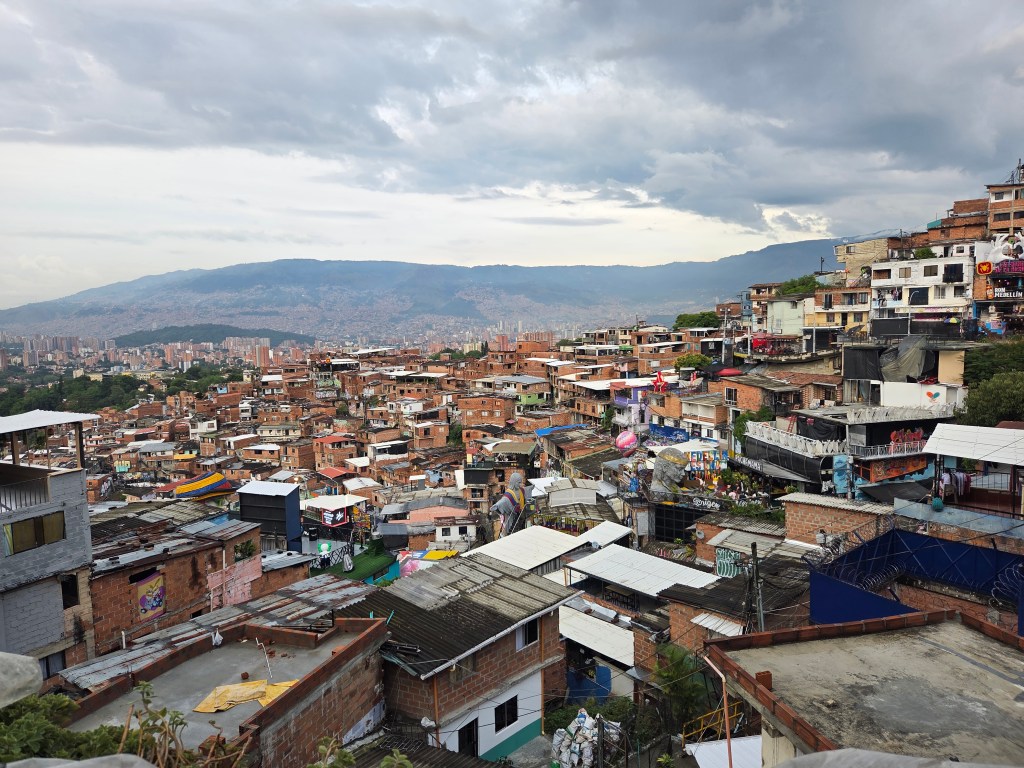
Environmentalist and rapper Luis Fernando Álvarez, known as El AKA, offered another understanding of the community. His account did not begin with tourists or colorful walls. It began with residents recognizing that they could not wait for the state to create the conditions they needed.
“We figured out that the state isn’t the one that’s going to figure things out,” he explained. “We figured out that it’s us.”
That recognition became a claim to the neighborhood itself: “We are the ones that have to make these places our own.”
For El AKA, hip-hop was one tool for practicing that collective authority. Through La Élite, artists and community members created alternatives through music, education, environmental work, and a community plant nursery. At first, a nursery and hip-hop might seem to belong to different worlds. El AKA rejected that separation.
“Hip-hop is street,” he said, “but under that street, there’s earth, and in the earth lives a story that hasn’t been told yet.”
His words changed how I understood the streets around me. The murals were not the beginning of the neighborhood’s story. Beneath what visitors could see were histories of migration, labor, displacement, family, and survival—and the lives of people who built the community long before it became an international destination.
That work does not depend upon denying fear. “You have to feel the fear,” El AKA said, “but it can’t be part of our daily life.”
“When dealing with fear, we say ‘play,’” he explained. “We say ‘knowledge.’”
When violence attempts to control where people walk, gather, and speak, playing, planting, performing, and learning in public can become refusals of that control. Children and young people need more than survival. They need spaces to build relationships, develop knowledge, and imagine futures beyond the choices armed actors place before them.
This is why it would be incomplete to say that art “saved” Comuna 13. That language can turn sustained community work into a simple story of cultural rescue while obscuring the organizing, education, environmental work, and everyday care behind it. Art did not end criminal control, inequality, disappearances, or threats against community leaders. It created ways to live, organize, remember, and speak within those conditions.
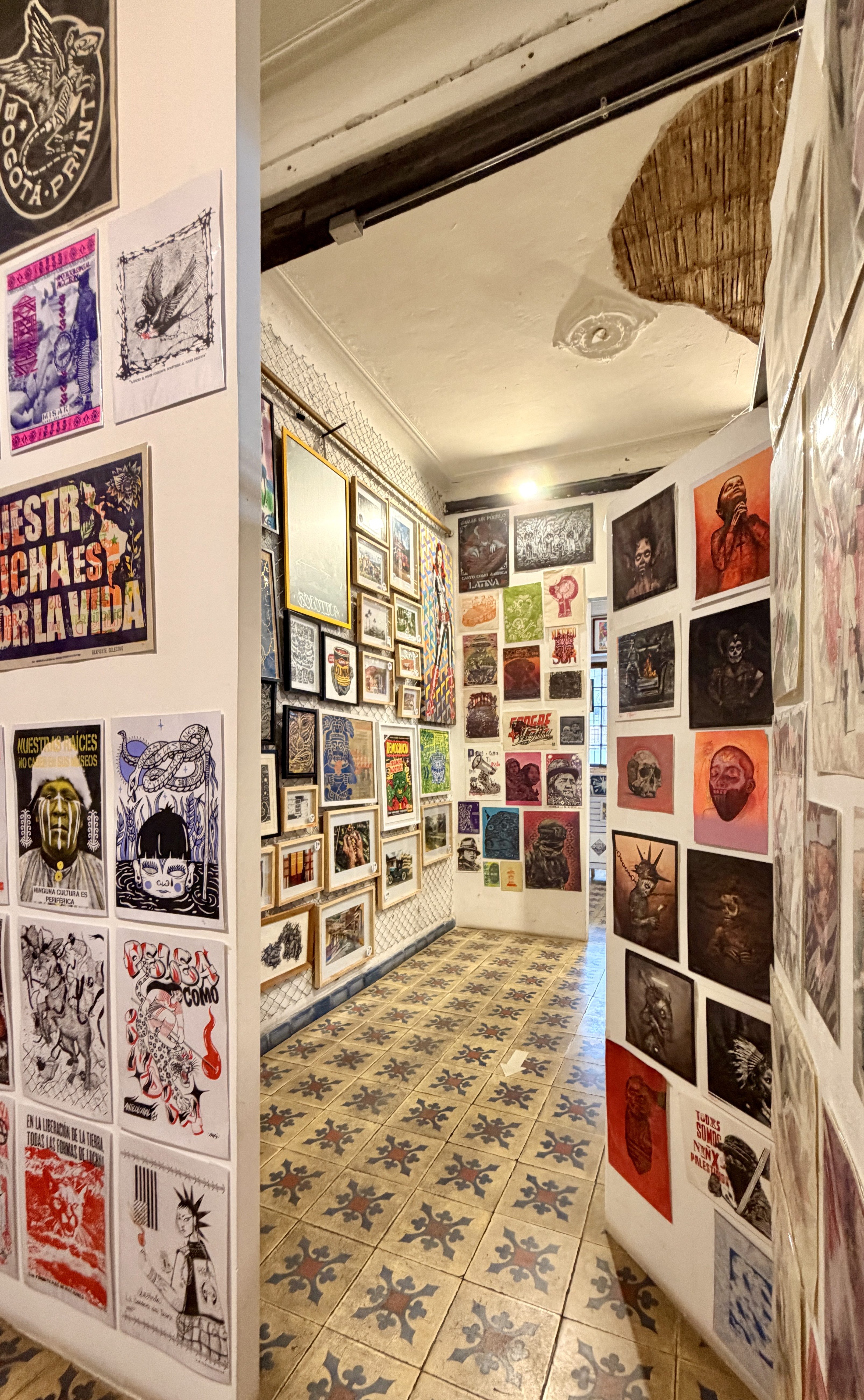
I encountered a related struggle over representation at Casa Cultural Nuestra Herencia in Bogotá. MAFAPO’s painted boots appeared there as they had at the Centro de Memoria, Paz y Reconciliación. Their presence in both a public memory institution and an independent cultural space showed how testimony could circulate between places and reach different audiences without surrendering its demand for justice.
The walls at Casa Cultural held many versions of Colombia, addressing cultural and ethnic identity, femininity, politics, territory, violence, and resistance. Marlin explained how analog printmaking allowed these ideas to be reproduced, worn, sold, and carried into everyday life, creating both expression and income for artists.
The space did not replace one narrow image of Colombia with another. It allowed artists grounded in different territories and experiences to place their own interpretations of the country before the public. That multiplicity resists the idea that Colombia can be understood only through drug trafficking, conflict, or spectacular violence.
The connection between visibility, authorship, and livelihood becomes more fragile when art circulates through tourism.
Tourism has brought income, attention, and opportunity to Comuna 13. Residents work as artists, guides, performers, vendors, and business owners. Community-led tours can allow people to confront the narratives imposed upon the neighborhood, communicate its history directly, and benefit economically from the interest their work has generated.
But visibility and control are not the same thing.
The neighborhood’s murals now travel far beyond their walls through photographs, videos, advertising, and social media. An image created within a particular political and historical context can become separated from its artist and meaning. Resistance can become an aesthetic. Memory can become a backdrop. A neighborhood can be presented as an attraction whose value lies in allowing outsiders to consume a dramatic story of transformation.
I had to consider my own participation in that process. I had come to Colombia intending to learn about peacebuilding and resistance, and I carried a camera because I wanted to preserve and share what I encountered. But every photograph involved a decision about what would represent a place.
If I photographed only bright murals, performers, crowds, and views of the city, I could reproduce the idea that color itself proved the neighborhood’s problems had been resolved. I also did not want to use unfinished brick buildings as visual shorthand for poverty or treat people’s homes as symbols waiting for an outsider’s interpretation. Nor did I want to make violence the dramatic opening of a redemption story that ended with the visitor’s arrival.
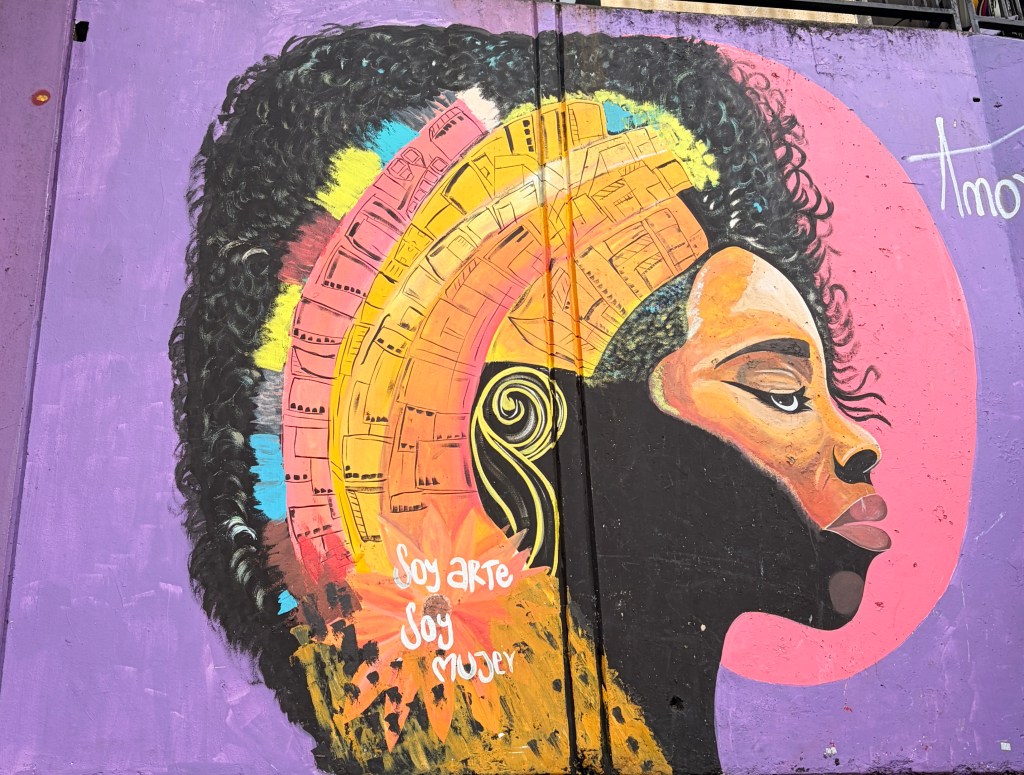
The question was not simply whether I could take a photograph. It was whether the story attached to that photograph would preserve the community’s authorship.
A visitor can see a mural without knowing who painted it. We can watch a performance without understanding the community work that made it possible. We can praise resilience without asking what people are still being required to endure. Even when we spend money in a neighborhood, we may not know whether it supports resident-led work or primarily benefits those who have learned how to market the neighborhood’s image.
These tensions do not mean that Comuna 13 should remain unseen or that visitors have no place there. Isolation also has consequences. For years, stigma allowed the neighborhood to be discussed as a problem while the cultural and political work of its residents received far less attention. The issue is not whether its stories should circulate. It is whether residents remain recognizable as their authors.
The most honest way to encounter Comuna 13 is therefore to resist reducing it to either violence or recovery. Both narratives can flatten the people who live there. One traps the community in its past. The other declares that past resolved and converts ongoing resistance into proof of a completed transformation.
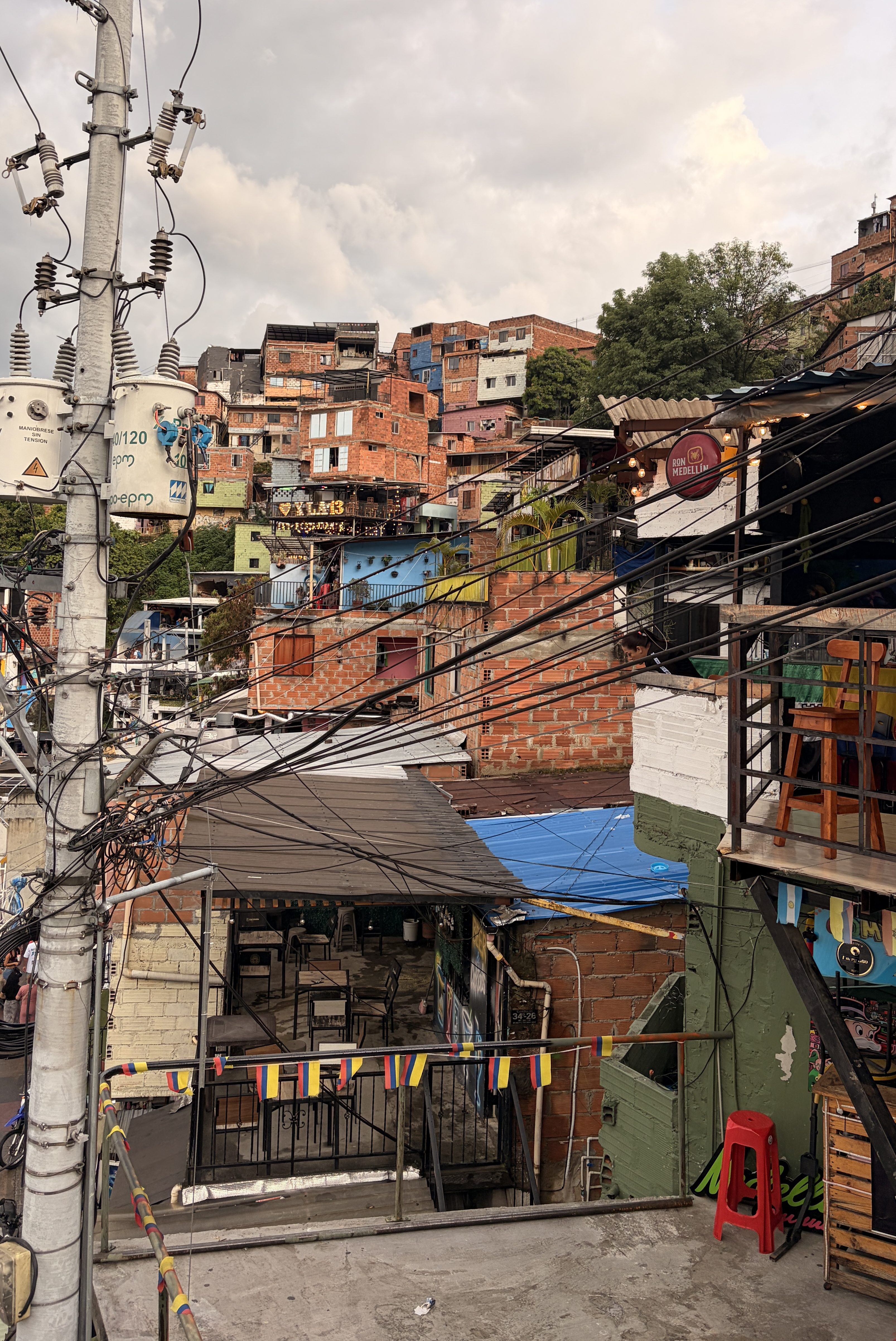
El AKA’s image of the earth beneath the street offers another possibility. A street is never only the surface a visitor sees. It holds what has been buried, built, remembered, and contested. The murals matter, but so do the people cultivating the ground beneath them and the histories that have not yet entered public view.
The right to be seen is not merely the right to attract attention. It is the right to appear as more than someone else’s image of suffering, danger, resilience, or inspiration. It includes the right to be known through one’s own words, art, labor, relationships, and complexity—and to decide what becomes public, what remains private, and how the value created through cultural expression returns to the community.
At Casa Cultural Nuestra Herencia, that right appeared through artists placing their own versions of Colombia before the public. In Comuna 13, it appeared through murals, music, dance, planting, teaching, gathering, and the continued assertion that residents themselves must make the neighborhood their own.
Art did not simply make these communities visible. It gave people tools for negotiating the terms of their visibility.
Being looked at is not the same as being heard. Becoming visible to the world does not guarantee that a community will retain control over what the world believes it has seen. Reclaiming a wall or street is therefore not the final act of resistance. The deeper work is sustaining what can grow there: knowledge, relationships, livelihoods, cultural identity, and forms of collective life that violence did not eliminate.
Peace Must Be Livable
Beneath the street, there is earth. Remembering what lies beneath a place, however, is only part of the work. People must also be able to build a life upon it.
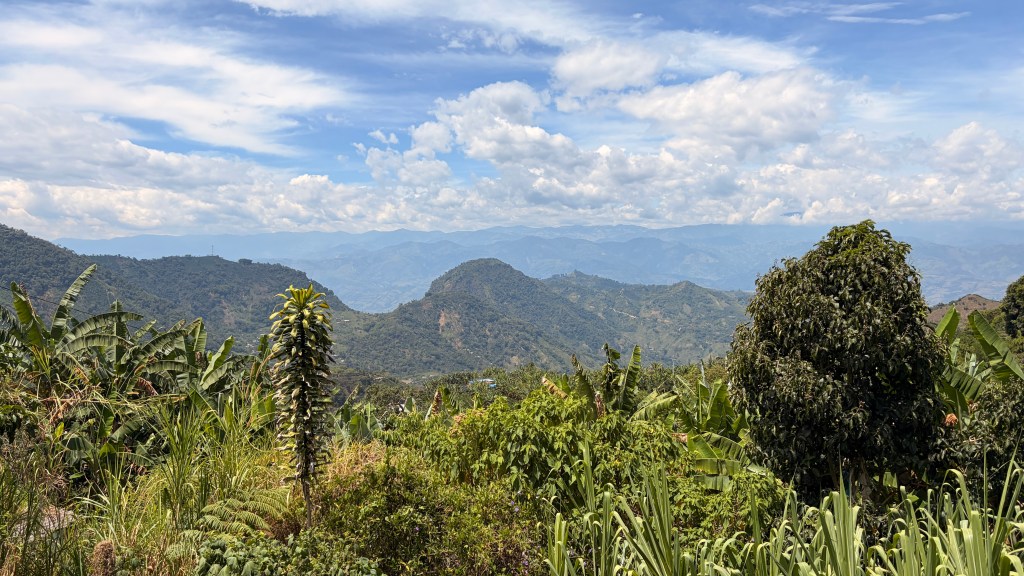
At the Universidad de Caldas, Juan Pablo Ospina Yepes introduced me to a form of resistance that did not begin with a mural, song, or monument. It began with organic waste and the larvae of the black soldier fly.
Through Emerge, the initiative he founded, Juan Pablo explores how materials treated as waste can become resources for rural and Indigenous communities. Black soldier fly larvae consume coffee pulp, fruit peels, restaurant waste, and other organic residues. The larvae provide protein-rich feed for animals, while the material they leave behind can fertilize crops.
Something discarded becomes feed and fertilizer. Yet the larger question is who controls the resources required to produce food. When farmers depend upon commercial feed, chemical fertilizers, and distant suppliers, they remain vulnerable to costs and decisions beyond their control. Transforming materials already present in a territory can expand what a community is able to produce and decide for itself.
For Juan Pablo, this work cannot be separated from Colombia’s armed conflict. He grew up in Pensilvania, a small community in the coffee region where armed groups shaped everyday life through fear. After studying forestry, he worked with approximately 500 rural families involved in cultivating illicit crops. He saw how limited access to education, viable markets, and legal livelihoods constrained the choices available to entire communities.
His commitment to rural development therefore did not emerge from an abstract theory about what communities needed. It grew from living in a territory affected by violence and working alongside families whose decisions were often judged without acknowledging the conditions surrounding them.
Conflict does not arrive only through weapons. It is also sustained by conditions that make some lives and livelihoods appear impossible. When agricultural work cannot support a family or education requires young people to leave their communities permanently, peace remains fragile.
Peace must therefore become material. It must appear in whether a family can produce food, whether a young person can study, and whether leaving home is a genuine choice rather than the only path toward survival.
Juan Pablo described what that can look like at Gitó Dokabú, an Emberá Katío Indigenous reserve. Working with the Universidad de Caldas, students and community members established a system that transforms organic waste into feed for laying hens. The chickens produce approximately 60 trays, or 1,800 eggs, each week. The community also earns income by selling hens and has discussed using resources from the project to support access to higher education.
I learned about this work from Juan Pablo rather than through a visit to Gitó Dokabú or conversations with community participants. His account therefore offers one perspective on the project; it cannot substitute for how community members would describe its meaning or impact themselves.
Waste becomes feed. Feed supports chickens. Chickens produce food and income. That income can create educational possibilities.
Yet the project’s importance cannot be measured only in eggs. What matters is who understands the process, operates it, and benefits from what it creates.
Juan Pablo explained that the Gitó Dokabú community had made the technology its own. Students learned how the system worked and connected it to needs identified within their community. The knowledge did not remain exclusively with the university or depend upon the continued presence of those who introduced it.
That ownership distinguishes autonomy from an intervention that leaves a community dependent upon outside expertise. Emerge begins from the premise that people should be able to adapt knowledge, teach it to others, and determine how it fits within their own priorities.
Juan Pablo calls this approach “positive resistance.”
The resistance is not located in the insect itself. It lies in challenging the assumption that rural communities must continually purchase expensive inputs or wait for outsiders to act upon the problems they face. It treats material dismissed as waste as a source of food, fertilizer, income, and education.
Positive resistance does not mean ignoring structural inequality. Agricultural innovation cannot resolve unequal access to land, guarantee fair markets, fulfill the obligations of the state, or repair every harm caused by conflict and abandonment. Communities should not be expected to survive injustice through ingenuity alone. But community-controlled knowledge can expand the choices available within those conditions.
A family that spends less on animal feed can retain more of what it earns. A community that produces fertilizer from local organic material becomes less vulnerable to rising prices and disruptions in outside supply chains. A student who connects agricultural production to education may no longer have to see remaining in a rural territory and pursuing a professional future as mutually exclusive possibilities.
Education is central to that possibility. It is often presented as a path out of rural life, with success measured partly through distance from the community where someone began. Juan Pablo’s work suggests that education can also help someone remain, return, or create new opportunities within the territory that shaped them.
The goal is not to obligate rural young people to stay. It is to ensure that leaving and staying can both be chosen with dignity. The 1,800 eggs matter, but so does whether the system allows a student to imagine a future that did not previously seem available.
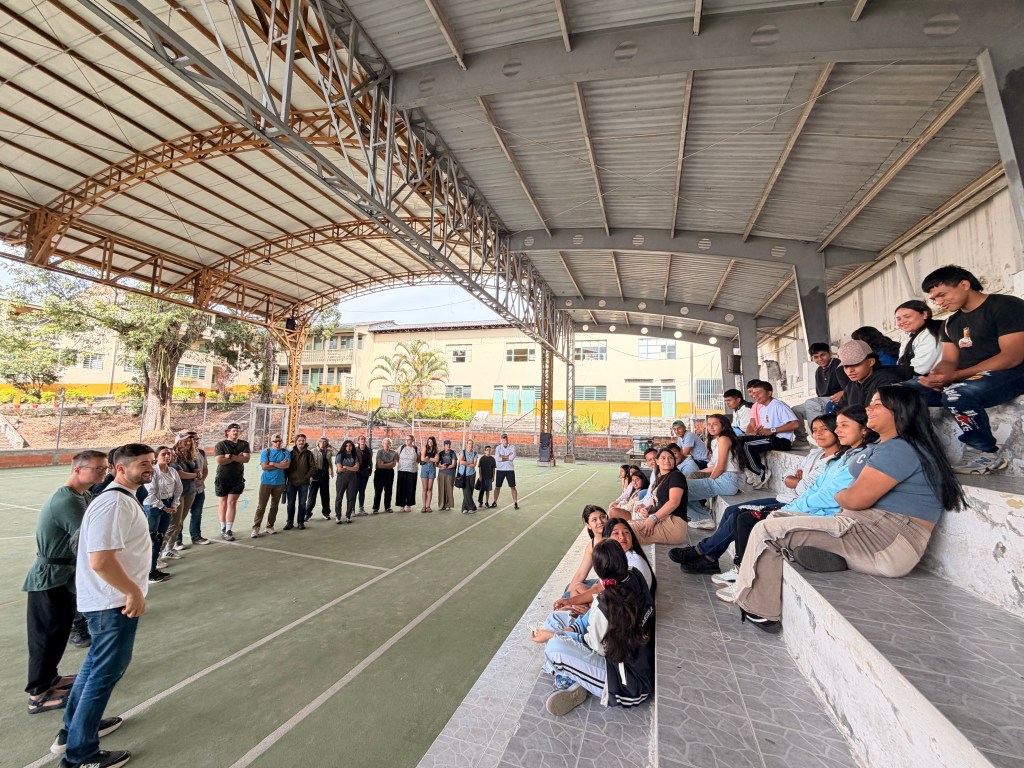
Knowledge gained through a university can circulate back into rural life, while knowledge held within rural and Indigenous communities can influence what universities study and how they understand development.
The relationship to art may appear less direct here. Black soldier fly larvae are not an art object, and agricultural technology does not need to be renamed as art to belong within a discussion of resistance. Yet Juan Pablo’s work revealed another dimension of creativity: recognizing possibilities within materials and places that others have dismissed as lacking value.
Cardboard became an archive in Cartongrafías. Rubber boots used to construct a lie became demands for justice in the hands of MAFAPO. Thread carried testimony once confined to private suffering. In Emerge, organic waste becomes food, fertilizer, income, and education.
These projects are not equivalent, but each rejects an imposed conclusion about what something, someone, or somewhere is worth. Memory protects people from being reduced to what happened to them. Material peace protects them from remaining trapped by the conditions that followed.
Juan Pablo hopes Emerge can eventually become an international network through which rural and Indigenous communities share knowledge. The goal is not to install the same system everywhere, but to allow communities to adapt, use, or reject ideas according to their own environments and priorities.
That distinction matters in international service and development. It is easy for outsiders to arrive with a model, call it a solution, and measure success by whether it was delivered. It is harder to build relationships in which knowledge moves in multiple directions and communities retain authority over what happens next.
I came to Colombia asking how art becomes resistance, but the people I met expanded the meaning of both words. Resistance could preserve a memory, reclaim a wall, cultivate a garden, or question who gave an order. It could also take the form of a student learning how an insect transforms discarded material into something their community can use.
None of these practices makes peace inevitable. They do, however, give peace somewhere to live.
Peace lives in the ability to remember without surrendering the future to what happened. It lives in public spaces where people can gather without fear, in cultural work that provides expression and livelihood, and in knowledge that allows communities to create value without relinquishing control.
Art can help people envision a world beyond violence. Positive resistance asks how that world might be fed, taught, sustained, and made possible in everyday life.
By the end of the journey, I understood the hands holding the flower differently. They did not represent peace as something delicate and complete, but the work of keeping possibility alive. Hands bound cardboard into archives, stitched testimony into cloth, painted boots, hammered metal made from surrendered weapons, cultivated plants in community nurseries, and transformed discarded material into food. Peace was not simply imagined. It was made and sustained through collective work.
Peace cannot remain only an agreement, a memory, or an aspiration.
It must become a life people are actually able to live.
Author’s Note | August 11, 2026
As I completed this project, a 7.4-magnitude earthquake struck western Colombia, causing loss of life and widespread damage. In Manizales, homes and community infrastructure were affected, and part of the cathedral where I had stood only weeks earlier collapsed. I hold the friends, teachers, and communities who welcomed me especially close as recovery begins.
Acknowledgments
This project was made possible by the artists, educators, researchers, organizers, students, and community members who welcomed me and generously shared their knowledge and experiences.
I am especially grateful to Andrés at Fragmentos; Marlin at Casa Cultural Nuestra Herencia; Juan Rolando Paz and Andrés Felipe at the Centro de Memoria, Paz y Reconciliación; Juan Pablo Ospina Yepes, Felipe, Juan Diego, Juan David, and Andrés, whose knowledge and conversations shaped the section about Emerge and the work taking place through the Universidad de Caldas; and David Aponte Castro, Security, Development, and Public Policy Advisor at the Universidad de los Andes.
Agradezco a Natalia y Justin por su ayuda en la traducción y revisión de las entrevistas y los materiales en español utilizados en este proyecto, así como de la traducción al español de este ensayo.
I am also grateful to Youthlinc, the RootEd Global Impact Fellowship, Utah State University, the Universidad de Caldas, and the Universidad de los Andes for helping make this learning possible. Their generosity shaped this work. Its interpretations and any errors are my own.
Sources and Methods
Este ensayo se basa en observaciones realizadas durante mi viaje por Colombia; conversaciones con artistas, educadores, investigadores, organizadores, estudiantes y miembros de las comunidades; y materiales publicados por las instituciones y organizaciones mencionadas. Las entrevistas y conversaciones se realizaron en inglés y español. Las traducciones entre el inglés y el español se realizaron con la ayuda de mi hermano, Justin, quien es bilingüe gracias a sus estudios formales, y de Natalia, la hermana de mi pareja, Nic. Algunas citas se han editado ligeramente para mayor claridad sin alterar su significado. Las interpretaciones presentadas aquí son mías.